A standee is the display product people reach for when they want a shape, not a rectangle: a life-size figure, a product cut-out, a character, a brand mascot standing on its own in a shop or at an event. It sets up in seconds with no hardware, because the support is built in, and it is the only self-standing display we make that can be cut to your outline.
Here is how standees are made, the three materials you can choose from, the one artwork rule that decides whether it stands up, and where they belong.
What a standee is
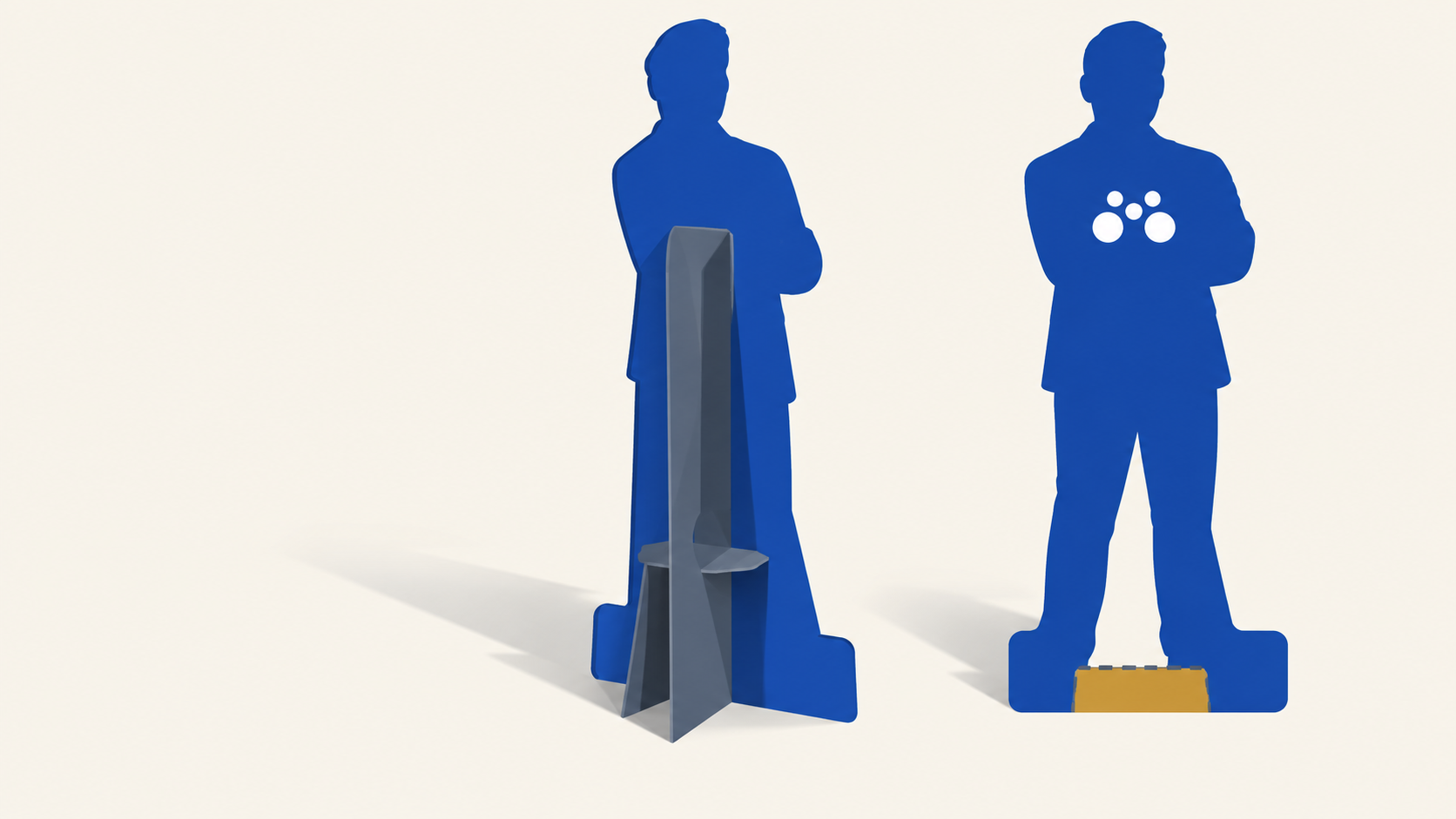
A standee is a rigid printed panel with a corrugated cardboard strut fixed to the back, so the whole thing stands upright on a floor or flat surface without any additional hardware. Unbox it, fold out the strut's stabilising flaps, stand it up. That is the entire setup.
Standees can be printed as squares, rectangles or simple custom shapes, with a maximum face size of 1200 x 2400mm, tall enough for a full-height figure. The custom-shape option is the point of the product: a flat rectangular sign can be a poster or a rigid board, but a cut-out figure or product silhouette that stands on its own is a standee.
The strut: sized to the height
Every standee is fitted with a rear double strut, and we size it to the standee's height:
- Under 1500mm high: an 800mm double strut.
- 1500mm to 2400mm high: a 1400mm double strut.
The strut is centred on the back of the panel with stabilising flaps that fold out to give a footprint, which is why the base of the artwork has a rule attached to it, covered below. You do not need to specify the strut; it follows from the height you order.
Three materials, and how to choose
Standees are printed on your choice of three rigid materials, and the choice changes weight, finish, rigidity and where the standee can live.
Corrugated plastic (3mm or 5mm). A 100% virgin polypropylene co-polymer sheet, white, in the same family as corflute. It is the lightest option at roughly 500g/m² for 3mm and 900g/m² for 5mm, water-resistant with negligible absorption, and outdoor-rated for up to 24 months. The fluted structure shows faintly through a flat print surface, so it is the practical, durable choice rather than the premium-finish one. Best for: cost-effective standees, anything that might see damp or a sheltered outdoor spot, and jobs that get moved and reused.
KAPAPlast (5mm or 10mm). A sandwich board with a rigid polyurethane foam core and plastic-coated, primer-finished facing layers. It prints flat and clean, holds its shape well, and the 10mm option is genuinely stiff, which suits large life-size figures that need to stay flat. Weights sit around 825g/m² for 5mm and 1050g/m² for 10mm. The facings are water and humidity resistant, but the board is an indoor product and is not flame retardant. Best for: indoor retail and event standees where a flat, premium print surface matters, especially at full height.
Foamed PVC (3mm). A solid, smooth, closed-cell PVC sheet with an excellent print surface and a clean cut edge. It is the heaviest per square metre of the three at roughly 1.2kg/m² for 3mm, and it is rated for both interior and exterior use, with one clear limit: a maximum service temperature of 55°C, so it should not be left in hot cars or direct summer sun where surface temperatures climb. Best for: the smoothest finish and cleanest cut on smaller to mid-size standees, particularly cut-out shapes where edge quality shows.
The honest short version: corrugated plastic for light, tough and cheap; KAPAPlast for flat, rigid and indoor; foamed PVC for the smoothest surface and cleanest edge. Tell us where the standee will live and how long it needs to last, and we will confirm the material.
The artwork rule that decides whether it stands
Because the strut attaches to the centre of the back and the base has to sit flat on the floor, the bottom edge of a standee's artwork is not free-form. This is the rule that catches people:
- The centre 350mm of the base must be flat and uninterrupted, a straight, continuous edge. This is where the stand structure sits.
- No cut-ins, cut-outs, holes or shaping within that centre 350mm.
- Cut-ins and curves are allowed on the outer edges only, outside the centre area.
- The design must have contact points at both ends so the standee sits flat on the ground.
In practice, a figure standing on a plain plinth or a straight base works; a figure whose feet are cut out individually, leaving a gap in the middle of the base, does not, because there is nothing flat for the strut to mount to and the standee rocks. If a design needs shaped feet, give it a flat base section beneath them, at least 350mm wide at the centre, with the shaping kept to the outer edges.
Setting up custom-shape artwork
Rectangular standees follow our standard board setup: print-ready PDF at 100% size, trim box at finished size, at least 3mm bleed, fonts outlined, CMYK, 300dpi images.
Custom shapes add the Thru-cut setup:
- Draw the cut path as a spot colour named exactly "Thru-cut", any colour except white, as a centre-aligned stroke (around 1pt).
- All Thru-cut paths must be closed shapes, with an outer outline always present even if there are inner cutouts.
- Extend artwork 3mm past the Thru-cut line.
- One standee, one cut, one file. Multiple items on a sheet are not accepted.
- Keep shapes simple: clean outlines and curves cut well; intricate detail does not. Any cut holes must be at least 6mm in diameter, as they are routed rather than drilled.
- Then apply the base rule above to the bottom of the cut path.
Where standees earn their place
Standees are an indoor promotional product first, and they excel at it:
- Retail point of sale — a product or character at floor level that a customer walks up to.
- Events and activations — a life-size figure for photos, a branded shape at an entrance.
- In-store branding and campaigns — mascots, ambassadors, launch visuals.
- Wayfinding with personality — a shaped sign where a rectangle would be ignored.
For a self-standing rectangle read from two sides, a toblerone sign is the cheaper fit. For a tall banner that packs into a bag, a pull-up is. Our guide to when to use a pull-up banner covers how the display formats divide the work.
Honest boundaries
- Not a wind product. Even on corrugated plastic, a standee is a light panel on a cardboard strut, and wind will move or flatten it. Outdoors means sheltered spots and short stints, and the cardboard strut itself is not weatherproof.
- Material limits are real. KAPAPlast is indoor only and not flame retardant. Foamed PVC must stay under 55°C, so no hot cars or baking sun. Corrugated plastic is the one that tolerates damp and sheltered outdoor use.
- Shape has limits. Simple outlines cut cleanly; intricate shapes do not, and the base rule is non-negotiable for stability.
Frequently Asked Questions
What is a standee? A freestanding printed display: a rigid panel with a corrugated cardboard strut fixed to the back, so it stands on a floor or flat surface with no additional hardware. Standees can be rectangular or cut to a simple custom shape, up to 1200 x 2400mm, which makes them the product for life-size figures and product cut-outs.
How does a standee stand up? A rear double strut with fold-out stabilising flaps, sized to the height: an 800mm strut for standees under 1500mm and a 1400mm strut from 1500mm to 2400mm. The strut mounts to the centre of the base, which is why the artwork's centre 350mm must be a flat, uninterrupted edge.
What is the base rule for standee artwork? The centre 350mm of the bottom edge must be flat and continuous, with no cut-ins, cut-outs, holes or shaping, because that is where the stand structure sits. Shaping is allowed on the outer edges only, and the design must have contact points at both ends so it sits flat.
Which standee material should I choose? Corrugated plastic for a light, tough, cost-effective standee that tolerates damp and sheltered outdoor use. KAPAPlast for a flat, rigid, premium print surface indoors, with 10mm for large figures. Foamed PVC for the smoothest surface and cleanest cut edge, keeping it below 55°C. Tell us the environment and we will confirm.
Can standees be used outdoors? Only briefly and in sheltered positions, and only on corrugated plastic. The cardboard strut is not weatherproof and the panel is light, so wind will move it. KAPAPlast is indoor only and foamed PVC must stay out of heat. For real outdoor signage, use a fixed corflute sign or a PVC banner.
What is the biggest standee you can make? A face size of up to 1200 x 2400mm, enough for a full-height, life-size figure. Standees over 1500mm are fitted with the larger 1400mm double strut for stability.
Key takeaways
- A standee is a rigid printed panel with a rear cardboard double strut, freestanding with no hardware, up to 1200 x 2400mm, in rectangles or simple custom shapes.
- Struts are sized to height: 800mm under 1500mm, 1400mm from 1500 to 2400mm.
- Three materials: corrugated plastic (light, tough, damp-tolerant), KAPAPlast (flat, rigid, indoor), foamed PVC (smoothest finish, stay under 55°C).
- The centre 350mm of the base must be flat and uninterrupted, with shaping on the outer edges only and contact points at both ends.
- Custom shapes use the Thru-cut spot colour, closed centre-aligned strokes, one cut per file, simple outlines only.
- Indoor promotional product first; not a wind product, and each material has its own environmental limits.
Order standees
Send the shape, the height and the environment, and we will match the material and fit the right strut. Mediapoint prints trade-only, blind-shipped standees up to 1200 x 2400mm in corrugated plastic, KAPAPlast or foamed PVC, rectangular or custom cut, with the rear strut included. Send your artwork through for a quote.