KAPAPlast is the board you reach for when foam core is not good enough and a solid plastic sheet is more than the job needs. It is light, it is flat, it holds a crisp print, and unlike ordinary foam core it does not dent the first time someone leans a chair against it. That combination has made it a quiet staple of exhibition, retail and reception signage, and it deserves to be understood properly rather than ordered as "the thick white board."
Here is what it is, what it is made of, where it belongs, and the limits that decide when to use something else.
What KAPAPlast is
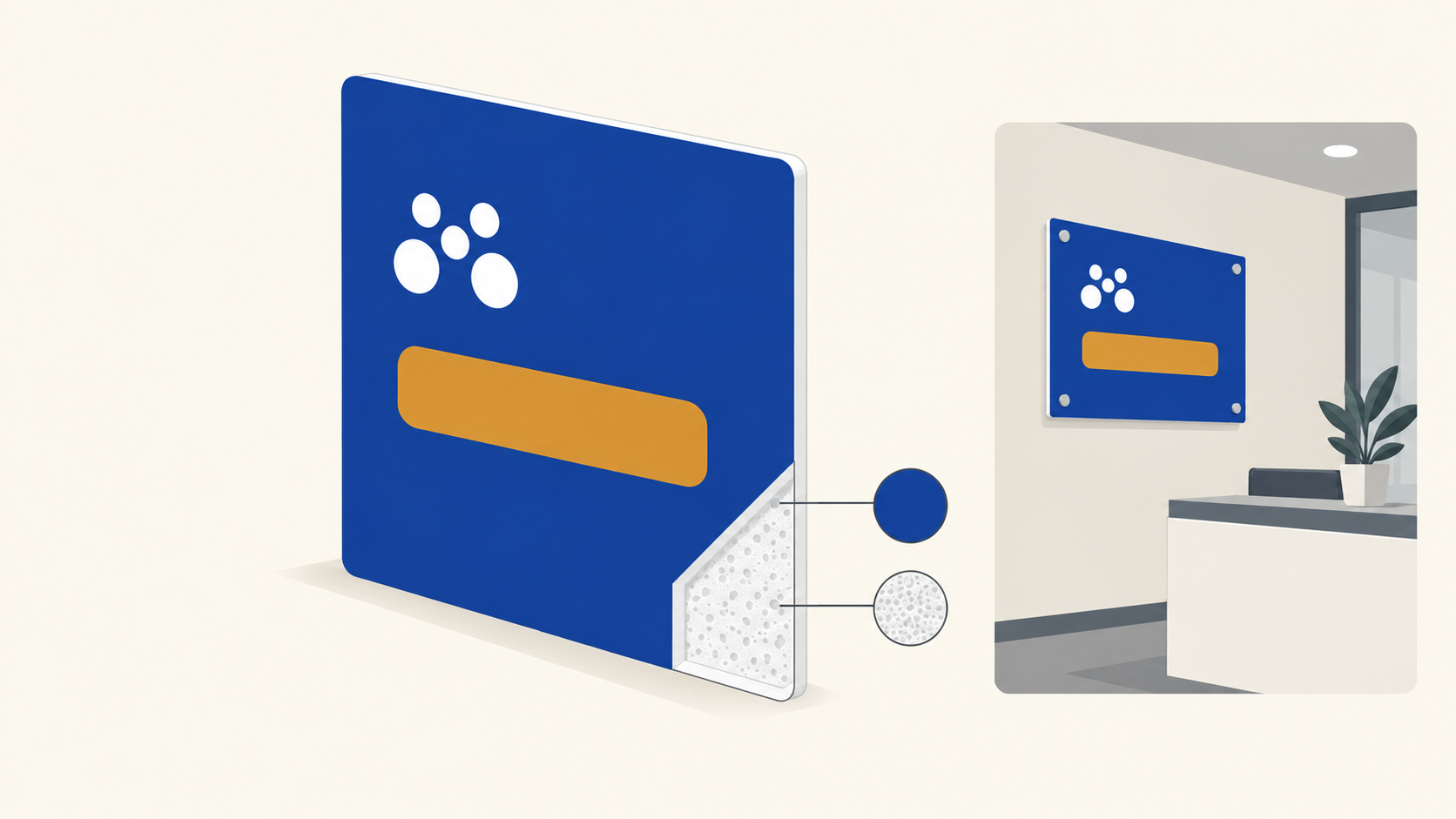
KAPAPlast is a sandwich board: a rigid polyurethane foam core faced on both sides with plastic-coated, primer-finished liners. That construction is the whole point. The foam core keeps it light and dimensionally stable; the plastic-coated liners give it a bright white, flat, hard surface that prints sharply and resists dents and edge damage far better than the paper liners on standard foam core.
The result is a board that is:
- Lightweight for its thickness, roughly 825g/m² at 5mm and 1050g/m² at 10mm.
- Flat and rigid, with the 10mm and 19mm options genuinely stiff over large panels.
- Dent and edge resistant, keeping a tidy appearance through repeated handling.
- Bright white with a smooth surface, giving sharp image definition and vibrant colour under UV print.
- Easy to handle and install, which matters on large exhibition panels.
We print it UV on the Durst flatbed using VOC-free LED inks, in custom sizes and shapes up to 2400 x 1200mm, single or double sided, with 24-hour production available.
Three thicknesses
- 5mm — the everyday option for hanging signs, wall panels and display boards where a light, flat, dent-resistant panel is what is needed.
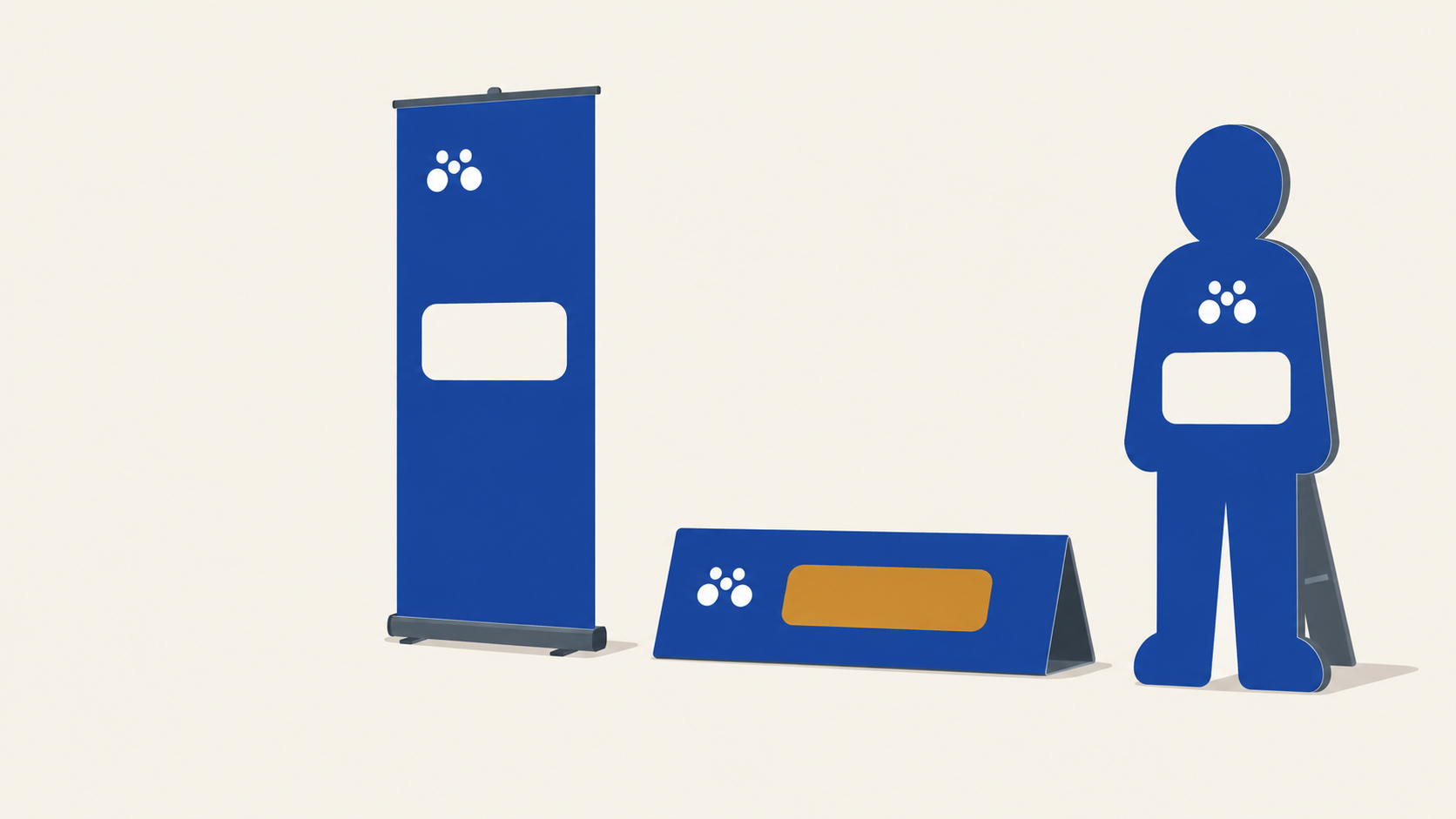
- 10mm — noticeably stiffer, suited to larger panels that must stay flat, freestanding displays and life-size standees, where KAPAPlast is one of the three materials offered.
- 19mm — the heavyweight, for panels that need real rigidity and presence: exhibition walls, dimensional signage and pieces that stand or hang on their own without visible flex.
Thickness is mostly a rigidity decision: the larger the panel and the more it needs to hold a dead-flat face, the thicker the board.
Where KAPAPlast is the right board
Its natural home is indoor display where finish and longevity both matter:
- Exhibition and event panels, light to transport, flat on the stand, robust through the bump-in and bump-out.
- Reception and interior branding, where a bright, smooth, premium-looking panel suits the setting.
- Retail and point-of-sale displays, especially hanging signage, where the low weight is a safety and installation advantage.
- Marketing collateral and presentation boards that get handled, moved and reused.
- Freestanding cut-out displays, via our standee product.
Because it is more robust than foam core, it is the better choice for medium-to-long-term indoor display. Foam core is for a week; KAPAPlast is for a season or longer.
Indoor only, and why
This one is not negotiable. KAPAPlast is designed exclusively for indoor use. The liners are plastic-coated, so the surface resists humidity, but the board is not built for weather: sunlight and moisture exposure can cause surface deformation, and the foam core is not flame retardant (fire classification B3 to DIN 4102).
So: no outdoor use, no damp environments, and for any venue with a fire-rating requirement, raise it at quoting so we can check rather than assume. For outdoor rigid signage, corflute and ACM are the boards built for it.
Shapes and cutting
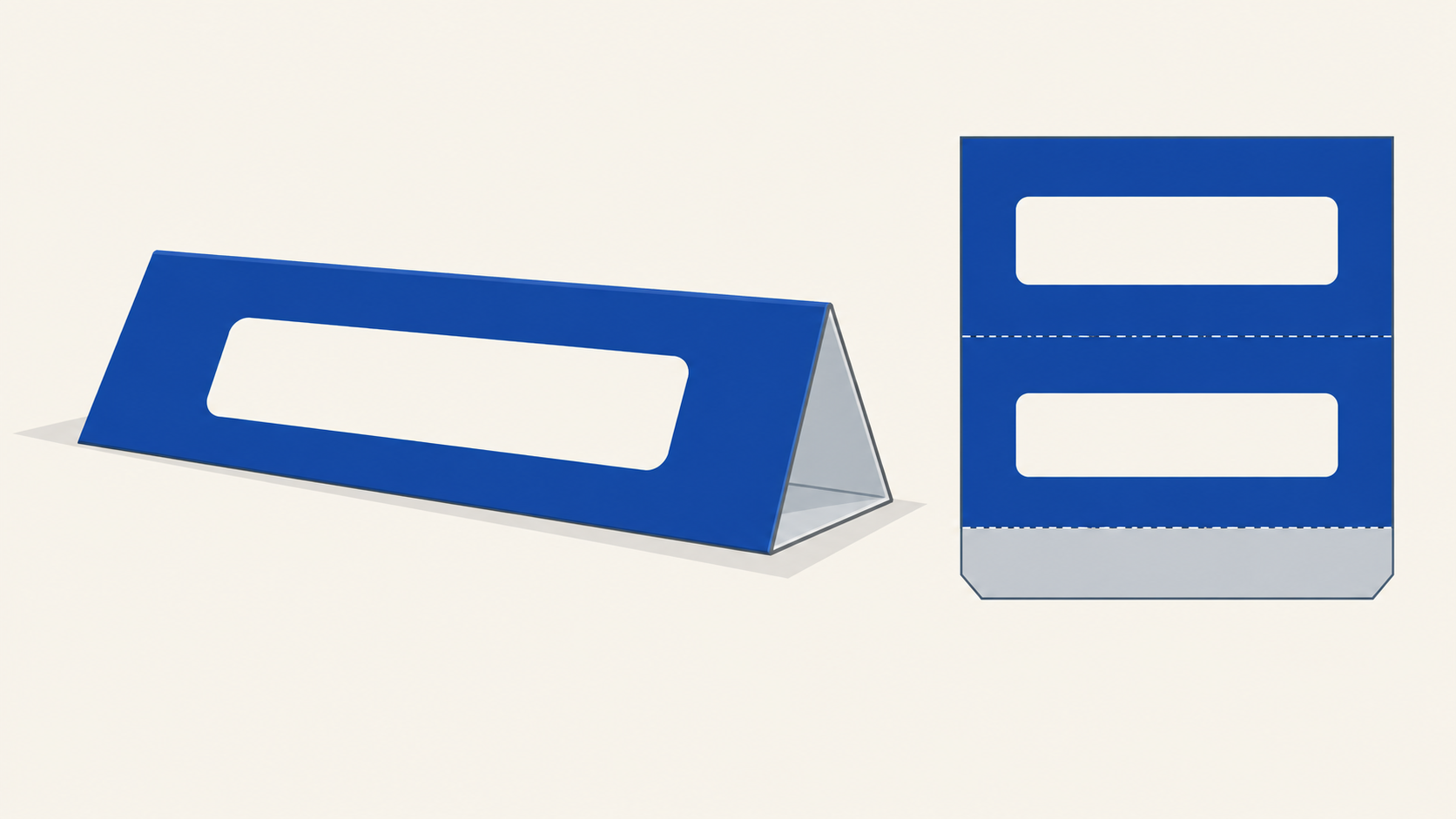
KAPAPlast cuts cleanly to simple shapes: rectangles, circles, ovals and smooth contour cuts. Simple convex shapes up to five points are supported. What we do not offer on this material is complex or concave cuts, and there is no V-cutting, so it is not the board for folded three-dimensional structures. If a design needs an intricate outline, foamed PVC is the better cutting material; if it needs to fold, it needs a different construction altogether.
Care
KAPAPlast keeps its appearance with minimal effort. Wipe gently with a soft, dry or damp cloth. Avoid harsh solvents and abrasive cleaners, which can damage the coated surface.
Artwork setup
KAPAPlast follows our standard board setup: print-ready PDF at 100% size, trim box at finished size, at least 3mm bleed for single-sided and 5mm for double-sided boards, fonts outlined, CMYK, 300dpi images, file named with the finished size and quantity.
For custom shapes, draw the cut as a spot colour named exactly Thru-cut, any colour except white, as a centre-aligned stroke, closed shapes only, 3mm bleed past the cut, one item and one cut per file, and keep the shape simple and convex as above. Holes are routed from 6mm diameter, kept clear of the edge.
For a smooth-surfaced alternative that cuts to more intricate shapes and tolerates a short outdoor stint, see our foamed PVC guide.
Frequently Asked Questions
What is KAPAPlast? A lightweight sandwich board with a rigid polyurethane foam core faced with plastic-coated, primer-finished liners. It is stronger and far more dent-resistant than standard foam core, with a bright white surface that prints sharply, which makes it a staple for exhibition, retail and reception signage.
Is KAPAPlast better than foam core? For anything beyond very short-term use, yes. Foam core's paper liners dent and crush easily; KAPAPlast's plastic-coated liners resist dents and edge damage and keep a tidy appearance through repeated handling, making it suitable for medium-to-long-term indoor display.
Can KAPAPlast be used outdoors? No. It is designed exclusively for indoor use. Sunlight and moisture exposure can deform the surface, and the foam core is not flame retardant. For outdoor rigid signage, use corflute or ACM.
What thicknesses does KAPAPlast come in? 5mm, 10mm and 19mm. Choose by rigidity: 5mm for everyday hanging and wall panels, 10mm for larger panels and standees that must stay flat, 19mm for exhibition walls and dimensional pieces needing real stiffness.
What shapes can KAPAPlast be cut to? Rectangles, circles, ovals and smooth contour cuts, with simple convex shapes of up to five points. Complex and concave cuts are not offered, and there is no V-cutting on this material.
What is the largest KAPAPlast sign you can print? Up to 2400 x 1200mm, single or double sided, in custom sizes and simple shapes, with 24-hour production available.
Key takeaways
- KAPAPlast is a rigid PU foam core faced with plastic-coated liners: light, flat, bright white and far more dent-resistant than foam core.
- Available in 5mm, 10mm and 19mm; thickness is a rigidity decision for panel size.
- Built for indoor display: exhibitions, reception, retail, hanging signage and standees, for medium-to-long-term use.
- Indoor only, no exceptions: sunlight and moisture deform it, and it is not flame retardant.
- Simple convex shapes only, no concave cuts, no V-cutting.
- Up to 2400 x 1200mm, single or double sided, standard board artwork setup with 3mm or 5mm bleed.
Order KAPAPlast signage
For indoor rigid signage that has to look premium and last a season or more, KAPAPlast is the board. Mediapoint prints trade-only, blind-shipped KAPAPlast boards UV on the Durst flatbed in 5, 10 and 19mm, single or double sided, up to 2400 x 1200mm. Send your artwork through for a quote.