Foamed PVC is the rigid board people specify when they want something that looks and feels like a proper sign but does not cost or weigh what ACM does, and does not dent the way foam core does. It is the everyday material for indoor point-of-sale, reception and exhibition signage, and it is widely misunderstood at exactly the points that matter: what it is, how much heat and weather it takes, and where it stops being the right board.
Here is the straight version, from the datasheet and the production floor.
What foamed PVC is
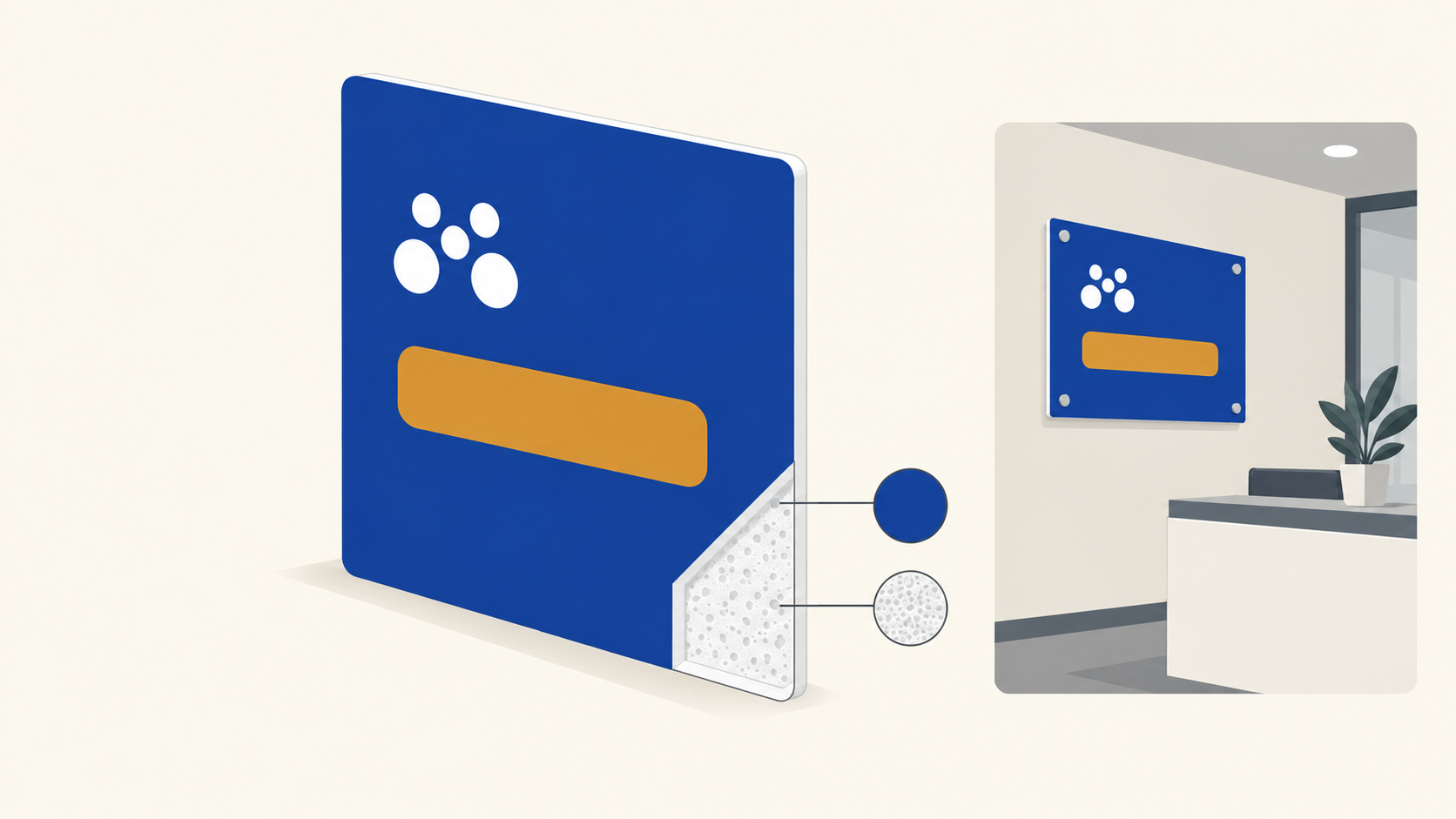
Foamed PVC is a solid, closed-cell PVC sheet with a smooth, dense skin over a lightweight foamed core. Think of it as a compressed foam board: it has the low weight of a foam product with a hard, printable, clean-cutting surface that foam core cannot match.
The practical result is a board that is:
- More resistant to dents and damage than foam core, because the skin is dense PVC rather than paper over polystyrene.
- Flexible enough to bend slightly, which makes it easier to transport and install without cracking.
- Smooth-surfaced, giving a top-end print finish with none of the flute lines you get on corrugated plastic.
- Light for its rigidity, at a nominal density of around 400kg/m³, roughly 1.2kg per square metre at 3mm.
- Clean-cutting, with a crisp routed edge, which is why it suits custom shapes.
We print it UV on our Durst flatbed, in custom sizes and shapes up to 2400 x 1200mm, with 24-hour production available.
Where foamed PVC is the right board
Its natural home is indoor signage that has to look sharp up close:
- Point-of-sale displays and shelf or counter signage.
- Reception and office signage, where a smooth, flat, premium-looking panel matters.
- Exhibition panels and headers, light to hang and transport, clean to look at.
- Presentation and branding boards, menus, directories, wall panels.
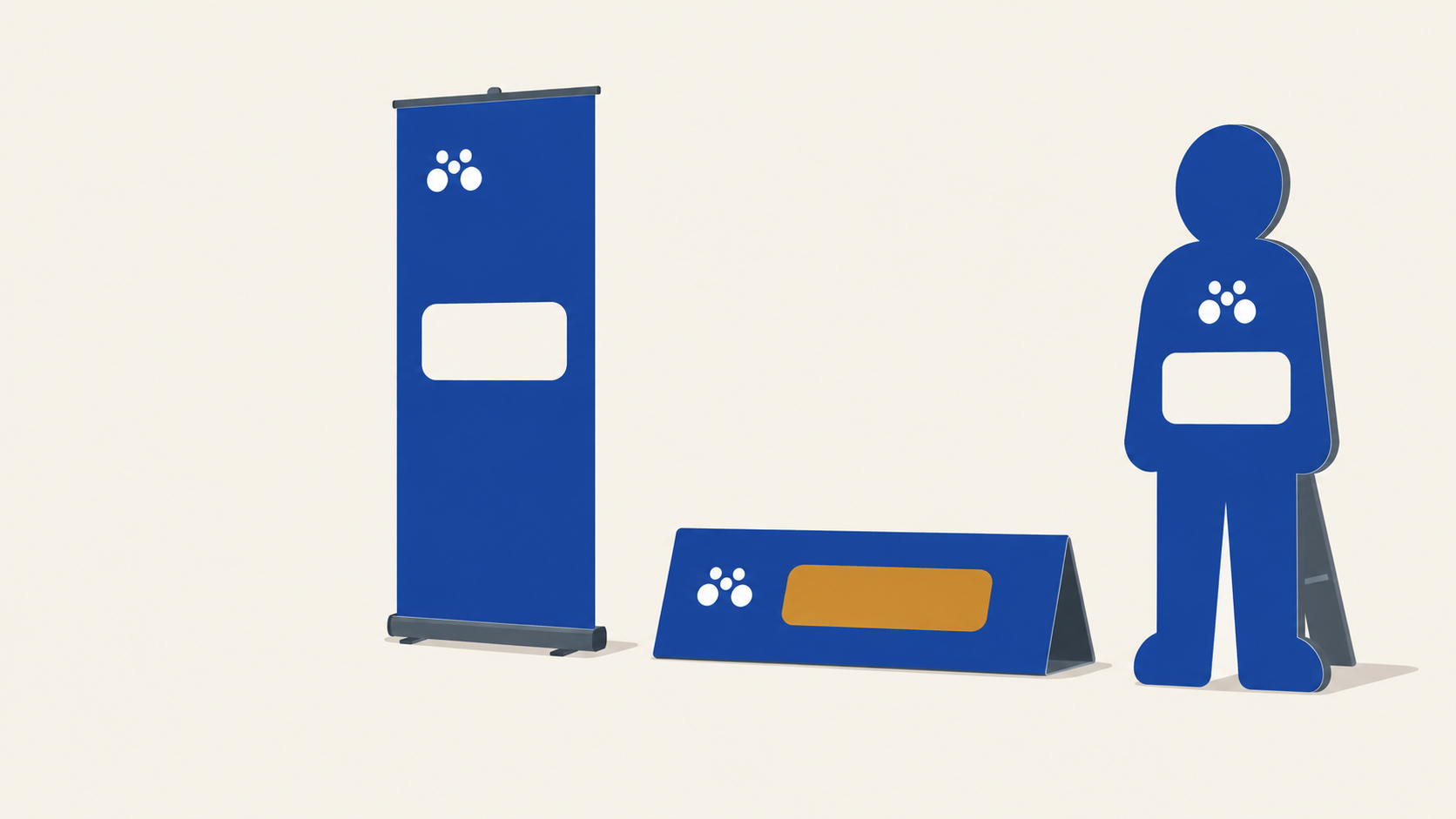
- Custom-shaped signage and standees, where the clean cut edge shows. It is one of the three materials we offer for standees.
If the brief is "a good-looking rigid sign, indoors, that will not get dented in transit," foamed PVC is usually the answer.
The heat question, answered honestly
Foamed PVC gets recommended for warm environments, and that is correct in the way that matters: it tolerates the warm indoor conditions that soften cheaper boards, shops and venues in summer, sun through a window onto a display, and it holds its shape where foam core sags.
The limit is real, though, and worth knowing. The datasheet rates the material to a maximum service temperature of 55°C. That sounds high until you remember that dark artwork in direct Australian summer sun, or a board left in a parked vehicle, can push surface temperatures past it. At that point the sheet can soften and distort.
So the honest rule: warm indoor is fine, warm indoor is what it is good at; sustained direct-sun heat on the surface is not. Keep it out of hot cars and off sun-baked exterior walls.
Indoor first, short-term outdoor only
Foamed PVC is an indoor signage material. The datasheet describes the sheet as suitable for interior and exterior applications, and it will handle a short-term outdoor stint, an event weekend, a promotion, a sheltered temporary sign, without trouble. What it is not built for is living outside: months of UV, weather and heat cycling are beyond what we would recommend it for, and the 55°C ceiling is part of why.
For long-term outdoor signage, use a board built for it: corflute for cost-effective short-to-medium term outdoor work, or ACM for a long-life premium install. Our comparison of corflute, ACM and foamboard covers how the rigid boards divide the work.
Fire performance
For venues that ask, the datasheet gives foamed PVC a fire classification of M1 (NF P 92-507) and C-s3, d0 (EN 13501-1) across 2 to 10mm thicknesses. Those are European classifications; if a site requires a specific Australian rating, tell us at quoting so we can confirm suitability against the requirement rather than assume.
Sizes, thickness and finishing
- Maximum sheet size: 2400 x 1200mm, cut to any custom size within that.
- Thickness: we supply 3mm as standard for signage and display work.
- Shapes: rectangles or custom shapes, routed on our cutters. Custom shapes need a Thru-cut cut line in the artwork.
- Holes: routed to your file, minimum 6mm diameter, kept well clear of the edge to avoid tearing the stock.
- Double-sided: available; note the bleed changes for double-sided boards.
Artwork setup
Foamed PVC follows our standard board setup: print-ready PDF at 100% size, trim box at finished size, 3mm bleed for single-sided boards and 5mm for double-sided, fonts outlined, CMYK, 300dpi images, file named with the finished size and quantity.
For custom shapes, draw the cut as a spot colour named exactly Thru-cut, any colour except white, as a centre-aligned stroke (around 1pt), closed shapes only, outer outline always present, 3mm bleed past the cut, one item and one cut per file. Holes are set up the same way, at 6mm diameter minimum.
Frequently Asked Questions
What is foamed PVC signage? A rigid board made from a solid closed-cell PVC sheet with a smooth dense skin over a lightweight foamed core. It combines low weight with a hard, printable, clean-cutting surface, and is more dent-resistant than foam core, which makes it the everyday board for indoor point-of-sale, reception and exhibition signage.
Is foamed PVC better than foam core? For durability, yes. Foam core is paper over polystyrene and dents easily; foamed PVC has a dense PVC skin that resists dents and damage, bends slightly without cracking, and tolerates warm conditions that make foam core sag. Foam core remains cheaper for very short-term, gently handled work.
Can foamed PVC be used outdoors? Short term, yes, an event weekend or a sheltered temporary sign is fine. It is not built to live outdoors for months: UV, weather and heat cycling are beyond what we recommend it for. For long-term outdoor signage, use corflute or ACM.
How much heat can foamed PVC take? It handles warm indoor environments well, which is why it suits shops and venues in summer. The material's maximum service temperature is 55°C, so sustained surface heat above that, dark artwork in direct summer sun or a board in a hot car, can soften and distort it. Keep it out of those conditions.
What is the largest foamed PVC sign you can print? Up to 2400 x 1200mm, in any custom size or shape within that, routed on our cutters with 24-hour production available.
Is foamed PVC fire rated? The datasheet rates it M1 (NF P 92-507) and C-s3, d0 (EN 13501-1). These are European classifications, so if a venue requires a specific Australian rating, raise it at quoting and we will confirm suitability rather than assume.
Key takeaways
- Foamed PVC is a solid closed-cell PVC board: a compressed foam core with a dense, smooth, clean-cutting skin, light for its rigidity.
- More dent-resistant than foam core, slightly flexible, and the smooth surface gives a premium print finish.
- Built for indoor signage: point-of-sale, reception, exhibition panels, custom shapes and standees.
- Tolerates warm indoor conditions well, but has a 55°C service ceiling, so no hot cars or sun-baked surfaces.
- Short-term outdoor use only; long-term outdoor signage belongs on corflute or ACM.
- Up to 2400 x 1200mm, custom shapes via Thru-cut, routed holes from 6mm, 3mm bleed single-sided and 5mm double-sided.
Order foamed PVC signage
For indoor rigid signage that looks sharp and survives transit, foamed PVC is the everyday answer. Mediapoint prints trade-only, blind-shipped foamed PVC boards UV on the Durst flatbed, in custom sizes and shapes up to 2400 x 1200mm, with 24-hour production available. Send your artwork through for a quote.