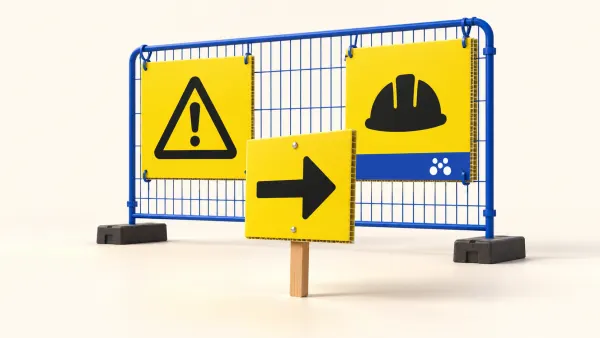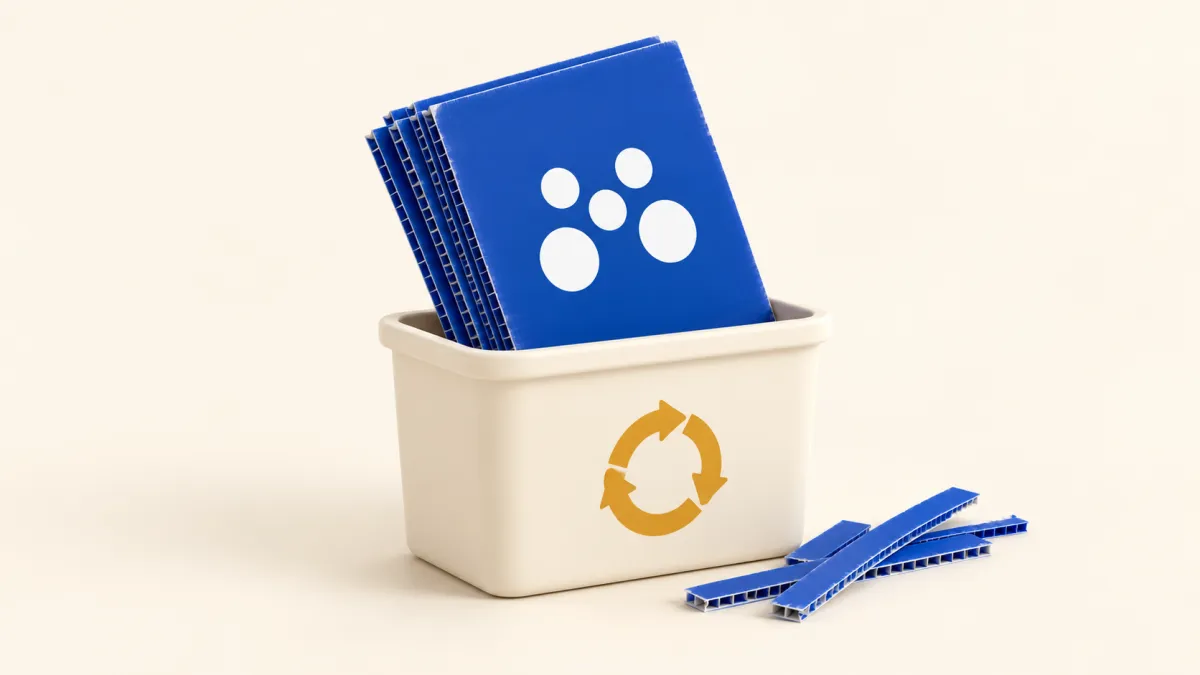
Quick answer: Yes, Corflute® is recyclable. It's polypropylene (recycling code 5), PVC-free, with no chlorine or heavy metals. But most council kerbside bins won't take signage board, so used signs need to go to a facility that accepts polypropylene, with eyelets, stakes and ties removed first. For clients who want recycled content up front, Corflute® Eco is Australian-made board with 50% recycled content.
Mediapoint is a trade-only printer in Derrimut, Melbourne. We print Corflute® signs for print resellers, sign shops, designers and agencies, and clients increasingly ask what happens to the signs after a campaign. This guide gives you clear, accurate answers to pass on.
What Corflute® is made of
Corflute® is Corex's twin-wall corrugated polypropylene (PP) board, made in Australia. It's a single plastic, not a laminate of different materials, which is what makes it recyclable in principle. It contains no PVC, chlorine or heavy metals.
We print it with UV-cured inks, which are low-VOC. The ink layer is thin compared with the board.
New to the material? See what is Corflute®.
Can Corflute® go in the recycling bin?
Usually not. Most council kerbside services don't accept signage-grade Corflute®, even though it's a recyclable plastic. Large rigid sheets and fittings cause problems at household sorting facilities.
What to tell clients:
- Check locally first. Ask the local council or a commercial plastics recycler whether they take polypropylene (code 5) sheet.
- Use a PP recycling facility. Signs should go to a facility that accepts polypropylene, not into the household yellow bin.
- Recycling is arranged by the reseller or end user. Plan who collects the signs and where they go before the campaign ends.
How to prepare signs for recycling
- Remove metal: take out eyelets, wire stakes, H-frames, screws and nails.
- Remove ties and tape: cut off cable ties and peel off any edge tape or added stickers.
- Keep them clean and dry: knock off dirt and mud, and let wet signs dry so water isn't trapped in the flutes.
- Stack flat: flat, bundled boards are easier to collect and transport.
- Keep PP separate: don't mix Corflute® with foam boards, PVC or ACM, which are different materials.
Reuse before recycling
The lowest-waste sign is one that gets used more than once. A few habits help your clients get more from each board:
- Design for reuse. Leave dates and one-off details off signs that could run again, such as open-home, safety or directional signs.
- Store signs well. Keep boards flat, dry and out of the sun between campaigns.
- Clean gently. Wipe signs down; don't pressure-wash, which damages the print and forces water into the flutes.
- Reuse the hardware. Frames, stakes and A-frames can outlast several sets of boards.
Outdoors, expect 12–24 months of acceptable print life depending on UV and site conditions. Our Corflute® durability guide covers how to stretch that.
Corflute® Eco: 50% recycled content
Corflute® Eco is 5mm Corex board made from a blend of 50% post-consumer and post-industrial recycled polypropylene and 50% virgin material. It's:
- Made in Australia at Corex's Dandenong facility
- Carbon Neutral Certified (#CN172)
- As rigid and printable as standard Corflute®, with the same 12–24 months outdoor life
- Recyclable again at end of life through a PP recycling facility
The trade-off is appearance: Eco board has an off-white to light grey look with a subtle speckle, and the tone can vary slightly between batches. Strong colours and bold designs hide this well. If your client needs a bright, pure white background, standard Corflute® Print Only is the better fit.
Need fittings? Corflute® Eco with Eyelets comes ready for fences and frames.
Cutting waste at the ordering stage
Some waste is decided before anything is printed:
- Choose sizes that suit the sheet. Our board is 2400 x 1200mm. Standard sizes such as 600 x 900mm fit the sheet efficiently. See our standard Corflute® sign sizes guide.
- Pick Varied flute direction. When signs don't need to match, Varied lets us fit more signs on each sheet, which means fewer offcuts and a lower price.
- Order the right quantity. Over-ordering is waste too. Sheet-based pricing shows you where the next sheet starts.
- Match the board to the job. For signs meant to stay up for years, a longer-life board can beat several Corflute® replacements. Compare options in our rigid board material guide.
What not to claim
Clients care about this, so keep the claims accurate:
- Say "recyclable through polypropylene recycling facilities", not "goes in the recycling bin".
- Say "50% recycled content" for Eco board, not "made from recycled plastic" with no figure.
- Don't call standard Corflute® recycled or carbon neutral; those claims apply to Corflute® Eco.
- Corflute® is a registered trademark of Corex Australia. In your own marketing, use generic terms such as corrugated plastic signs.
Frequently asked questions
Is Corflute® recyclable?
Yes. It's polypropylene (code 5) and can be recycled through facilities that accept PP. Most council kerbside bins won't take it.
What recycling number is Corflute®?
Polypropylene is recycling code 5.
Do I need to remove eyelets before recycling?
Yes. Remove eyelets, stakes, ties and tape so the board is polypropylene only.
Is Corflute® Eco as strong as standard Corflute®?
Yes. It's built to match standard Corflute® for rigidity, print performance and outdoor life.
Is Corflute® better for the environment than PVC board?
Corflute® is PVC-free with no chlorine or heavy metals, and it's lighter, which cuts freight weight. For recycled content, choose Corflute® Eco.
Ready to order? Register for a trade account to see live pricing on Corflute® Eco and all Corflute® signs.