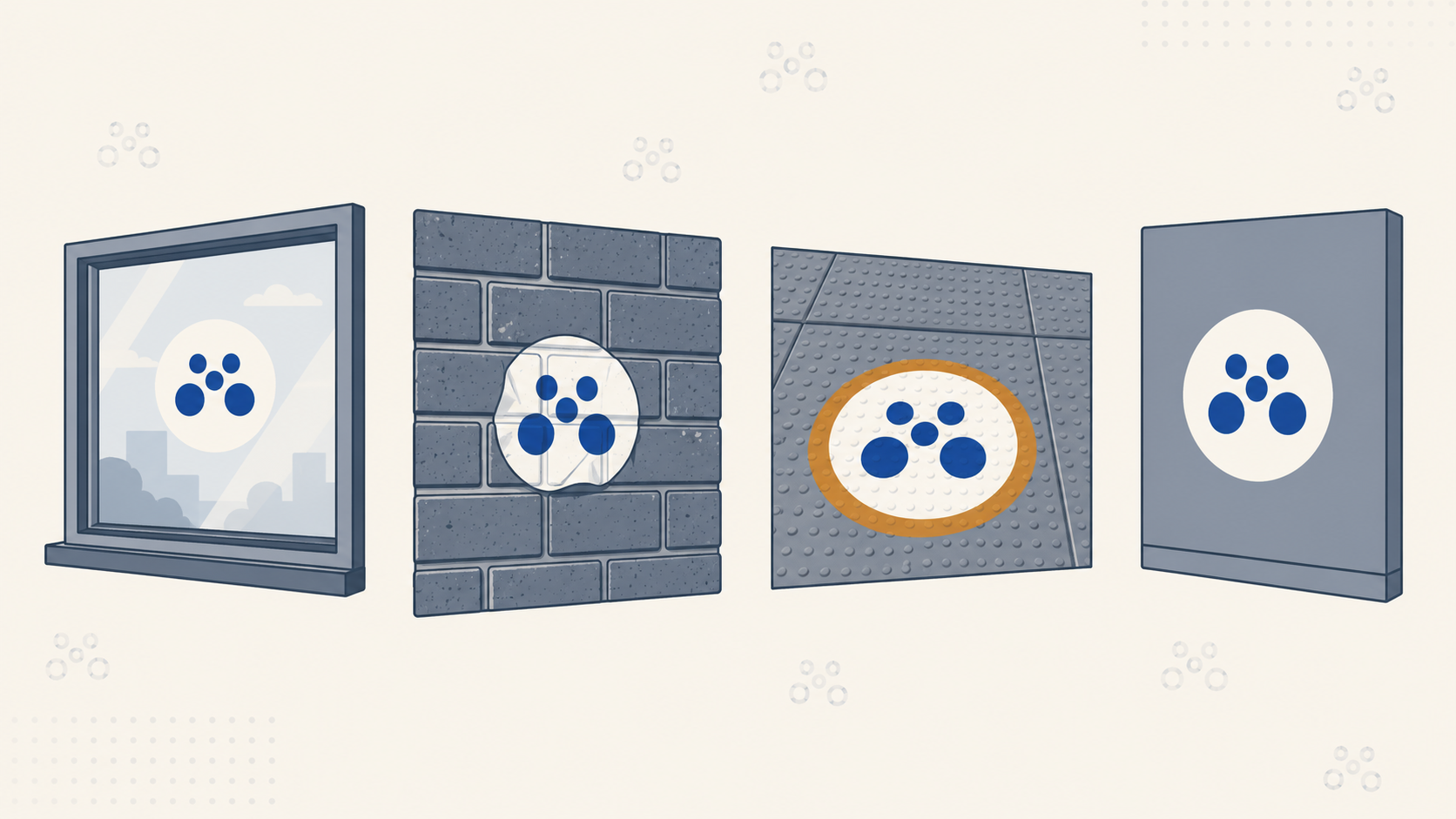
Stickers are one of those products where the material decision quietly does all the work. The same artwork printed on a promotional monomeric vinyl, a conformable polymeric film, or a removable stock behaves completely differently once it is applied, and choosing wrong is how stickers end up peeling off render, ghosting glue on glass, or fading a season early.
This guide covers the sticker stocks we run, what each is genuinely built for, and how to match the material to the surface and the job. It is written from the production floor, so the durability figures are our real-world numbers for printed product in Australian conditions, not brochure maximums.
The short version
Our large format stickers are printed UV on quality self-adhesive vinyls and cut on our Zund digital cutters. The range covers:
- Permanent white vinyl — the everyday workhorse for general signage, promotional and product stickers.
- Removable white vinyl — comes off cleanly, for windows, retail promotions, and anything temporary.
- Clear vinyl — for a see-through sticker, including our reversed stickers for inside-glass application.
- Conformable polymeric and textured-surface films — for harder surfaces such as brick, block and rendered walls.
- Laminates — gloss or matt protection over any of the above, plus a slip-rated laminate for floor graphics.
How long they last outdoors is the question everyone asks, so here is the straight answer up front: expect 2 to 3 years outdoors unlaminated, printed with our UV inks. Lamination adds roughly 1 to 2 years on top. Manufacturer datasheets quote longer lives, but those figures are for unprinted film in milder European climates. Our numbers are for printed stickers under Australian sun, which is the number that actually matters when you are quoting a client.
Permanent vinyl: the default
For most sticker jobs, a gloss white permanent vinyl is the right call. It is a premium-grade calendered film that prints beautifully, sticks reliably to the common surfaces (glass, metal, painted board, coreflute, vehicles' flat panels), and handles short to medium term outdoor exposure comfortably.
Use it for: promotional stickers, equipment and asset stickers, general outdoor signage stickers, point of sale, real estate applications.
The one thing to respect with any permanent adhesive: it is built to stay. Removing it later from delicate paint or old glass takes patience and sometimes leaves residue. If clean removal matters, that is a different stock, which is the next section.
Removable vinyl: when it has to come off cleanly
Unlike our roll labels, which run a single permanent adhesive, our sticker range includes removable-adhesive vinyl. The film is the same quality white stock, but the adhesive is engineered to release cleanly, typically for up to around a year after application, without tearing or leaving glue behind.
Use it for: retail window promotions, seasonal campaigns, event signage on hired or shared surfaces, anything applied to a wall or window you do not own.
Two honest caveats. Removability has limits, it is rated for standard surfaces, and certain paints and plastics can grab any adhesive harder than intended, so on a precious or unusual surface, test one first. And "removable" is not "repositionable forever": leave it up for years and it starts behaving like a permanent.
Clear vinyl and reversed stickers
Clear vinyl gives you a sticker where the unprinted areas are transparent, so the artwork appears to sit directly on the glass.
The clever version of this is our reversed sticker: printed in reverse on clear film and then backed in white, so the sticker is applied to the inside of a window with the artwork reading correctly from the street. Inside-glass application keeps the sticker out of the weather entirely, protected from sun, rain and vandalism by the glass itself, which makes it a smart choice for shopfront hours, branding and window campaigns.
One artwork note for clear film: colours print translucent on clear unless backed by white. On reversed stickers the white backing does that job. On standard clear stickers, talk to us about where white ink is needed so the artwork reads solid.
Textured and hard surfaces: brick, block and render
Standard vinyl wants a smooth surface. Put it on raw brick or rendered wall and it bridges the texture, grips the high points only, and starts lifting within days.
For those jobs we run a conformable textured-surface film, a polymeric PVC designed to be worked into brick, concrete block and poured concrete. It is the right answer for murals on masonry, wayfinding on raw walls, and construction-site branding straight onto the structure. It pairs with a laminate for durability, and it can be removed later with gentle heat.
If your job involves anything other than a smooth flat surface, tell us what the surface is when you get a quote. Matching film to surface is most of what makes a wall sticker succeed.
Laminates: gloss, matt, and floor-rated
Lamination on stickers does two jobs: it protects the print from abrasion and incidental chemical contact, and it extends outdoor life by roughly 1 to 2 years.
- Gloss laminate deepens colour and gives a wet-look finish.
- Matt laminate kills reflections, which suits window applications and premium branding.
- Floor laminate is its own category: a textured, slip-resistant overlaminate for floor graphics, tested to AS 4586:2013 Class P3 slip resistance. If a sticker is going on a floor in a retail or public space, a slip-rated laminate is not optional, it is what makes the graphic compliant and safe for foot traffic. Ours is rated for internal floor graphics.
For stickers that get handled hard, scrubbed, or live outdoors long-term, laminate is the cheapest insurance in the product.
Cutting: simple shapes, clean edges
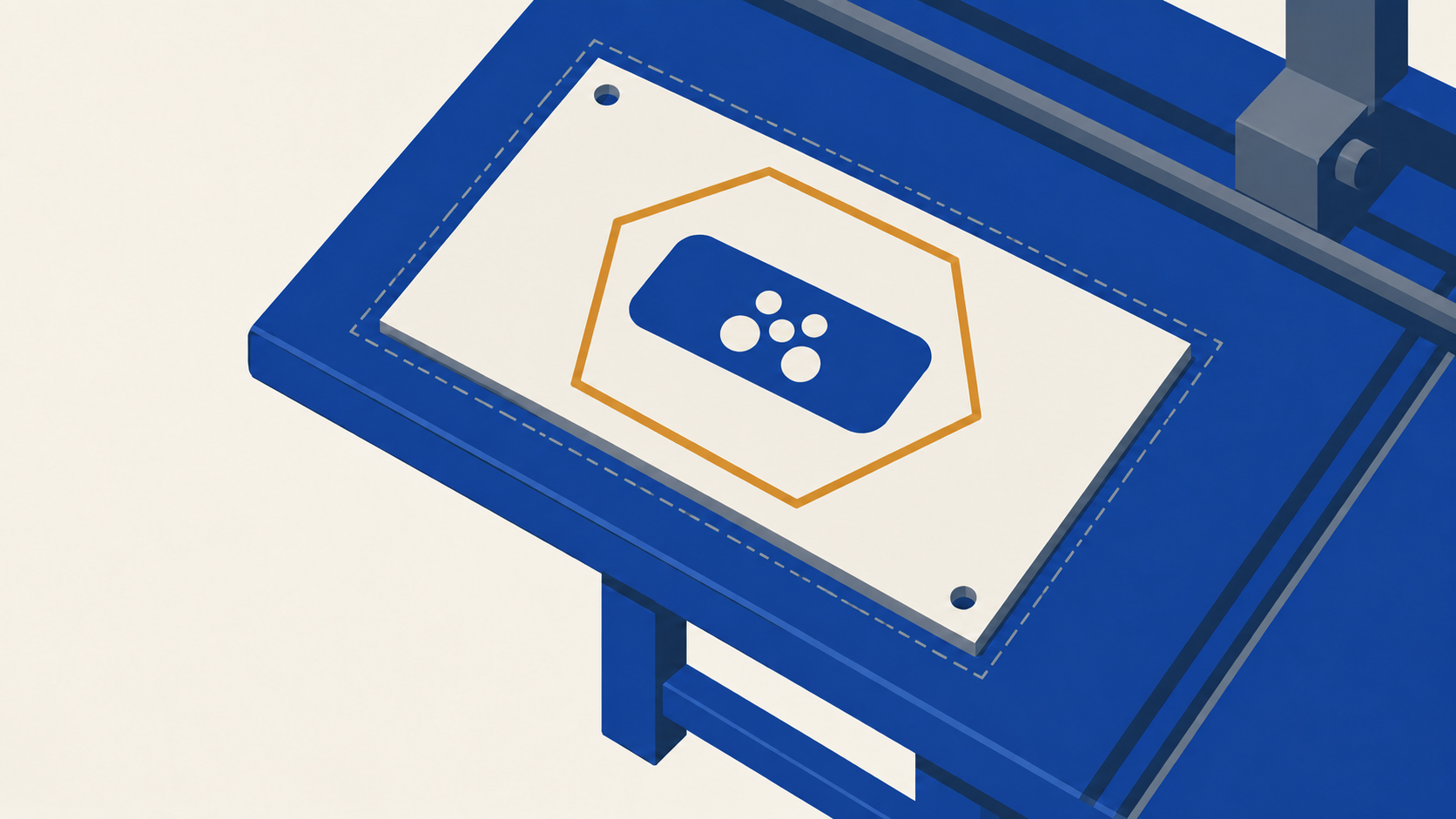
We custom cut stickers on our Zund digital cutters, and we offer simple shape cutting: clean circles, ovals, squares, rectangles with rounded corners, or straightforward outlines around your design. That keeps production fast and consistent, and it is what ensures every sticker peels and applies smoothly with clean, professional edges.
More complex or intricate shapes are not supported for large format stickers. They require slower cutting, and we cannot hold a high-quality edge with our tooling at that complexity, so we would rather be upfront about that than deliver a ragged cut. Keeping the shape simple is genuinely the better product.
Artwork for custom shapes needs a Thru-cut spot colour cut line set up correctly, one closed outer shape per file. Our artwork guide covers the exact setup, and it is worth reading before you build the file.
Stickers or labels? A quick disambiguation
The two products overlap, and the honest split is this: roll labels are for products, produced on our label press, on 76mm cores, at product-labelling sizes and prices. Large format stickers are for surfaces, windows, walls, floors, vehicles, signage, cut individually at bigger sizes on heavier vinyl.
If it is going on a jar, bottle or package, you want labels. If it is going on a window, wall or floor, you are in the right place. And if the job is outdoor and long-term, stickers are specifically the product we point label customers toward, because sticker vinyl and laminate are built for UV in a way label stock is not.
Frequently Asked Questions
How long do printed stickers last outdoors? Our real-world figure for UV-printed stickers in Australian conditions is 2 to 3 years unlaminated, with lamination adding roughly 1 to 2 years. Manufacturer datasheets quote longer service lives, but those are for unprinted film in milder climates, so we quote the printed, local number.
Do you offer removable stickers? Yes. Alongside permanent vinyl we run a removable-adhesive white vinyl that releases cleanly, typically for up to around a year after application. It suits windows, retail promotions and temporary signage. On unusual or delicate surfaces, test one sticker first, and remember that removable stock left up for years behaves increasingly like a permanent.
Can you print stickers for brick or rendered walls? Yes, on a conformable textured-surface film built for brick, block and concrete. Standard vinyl will not hold on those surfaces, it bridges the texture and lifts. Tell us the surface when you request a quote and we will match the film to it.
Are your floor stickers slip rated? Yes. Our floor graphics use a textured slip-resistant laminate tested to AS 4586:2013 Class P3, rated for internal floor graphics. A slip rating is what makes a floor graphic safe and compliant in retail and public spaces, so we treat it as a requirement rather than an upgrade.
What sticker shapes can you cut? Clean simple shapes: circles, ovals, squares, rectangles with rounded corners, and straightforward outlines around a design, cut on our Zund digital cutters. Complex or intricate shapes are not supported for large format stickers because we cannot hold a clean, high-quality edge at that complexity, and edge quality is what makes a sticker apply well.
What is a reversed sticker? A sticker printed in reverse on clear film and backed in white, applied to the inside of a window so the artwork reads correctly from outside. The glass protects it from weather and tampering, which makes it ideal for shopfront branding and window campaigns.
Key takeaways
- Printed stickers last 2 to 3 years outdoors unlaminated in Australian conditions, with laminate adding roughly 1 to 2 years.
- Permanent white vinyl is the default; removable vinyl exists for windows and temporary campaigns and releases cleanly for up to about a year.
- Reversed stickers print in reverse on clear, backed white, and apply inside glass, protected by the window itself.
- Brick, block and render need a conformable textured-surface film, standard vinyl will lift.
- Floor graphics need the slip-rated laminate, tested to AS 4586:2013 Class P3 for internal floors.
- Cutting is simple shapes only, circles, ovals, rounded rectangles and straightforward outlines, for clean edges that apply smoothly.
- Products get labels; windows, walls and floors get stickers.
Order stickers matched to the surface
The right sticker starts with the surface it is going on. Mediapoint prints trade-only, blind-shipped large format stickers UV on quality vinyls, cut clean on Zund digital cutters, with permanent, removable, clear, textured-wall and floor-rated options across the range. Have a look at reversed stickers and the wider sticker range, or send your artwork through for a quote and tell us the surface, and we will match the material to the job.