If you run a print business, one decision shapes your margins more than almost any other: do you produce work in-house, or outsource it to a trade printer? Both models can work, but they suit very different businesses. This guide breaks down the real costs, capacity, and trade-offs of each, so you can decide which is right for yours.
The Case for Printing In-House
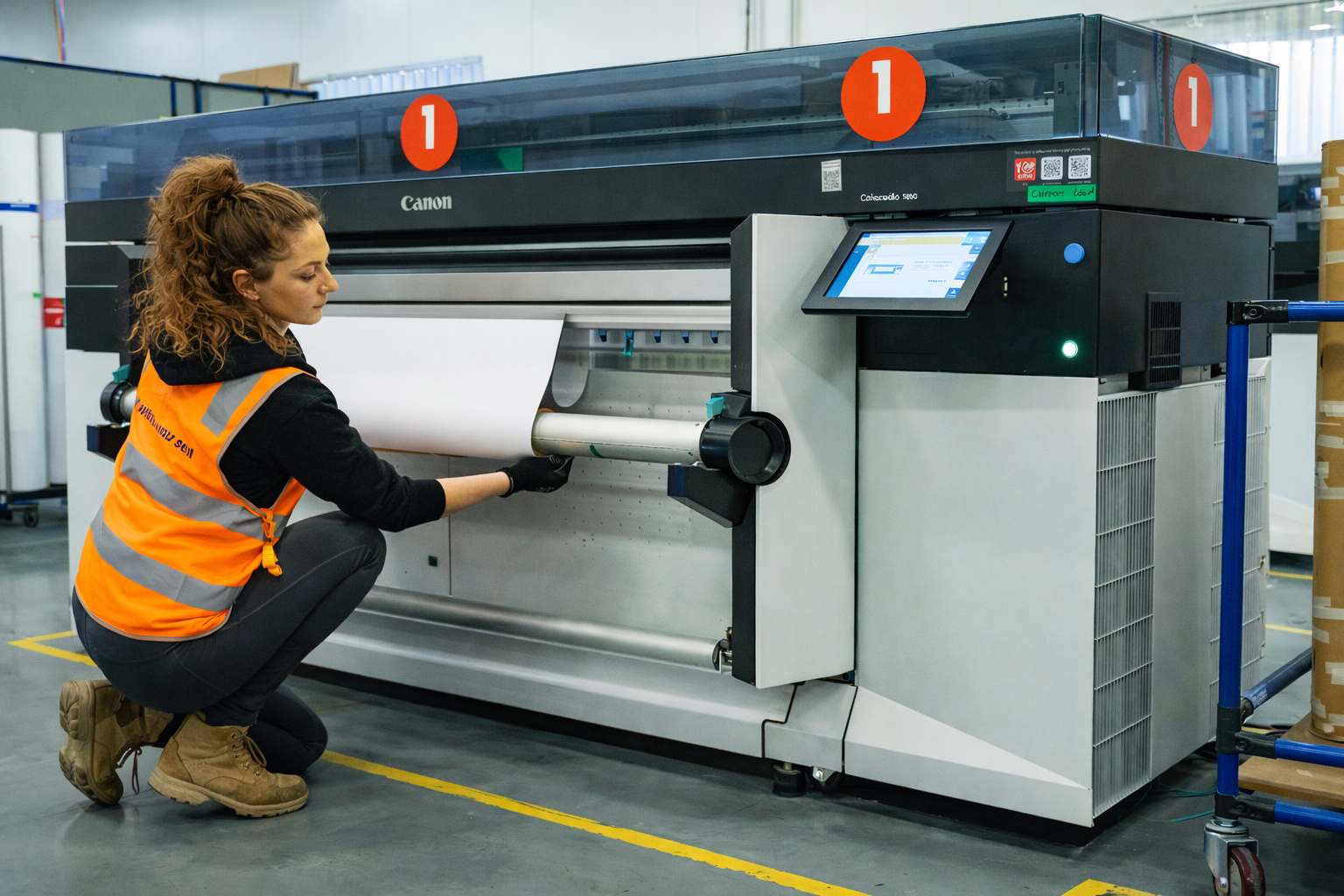
In-house printing is usually done on entry-level or mid-range equipment with a smaller footprint and lower volume. Run well, these machines produce good quality output — the trade-off is that they need more time per job and careful handling to perform at their best.
The biggest advantage of in-house equipment is flexibility. Because you're running lower volumes, you can change stocks ad-hoc between loads, turn around small orders quickly, and even produce same-day jobs from a single machine. For a business built around bespoke, urgent, or highly varied work, that flexibility is genuinely valuable.
The Hidden Costs of In-House Production
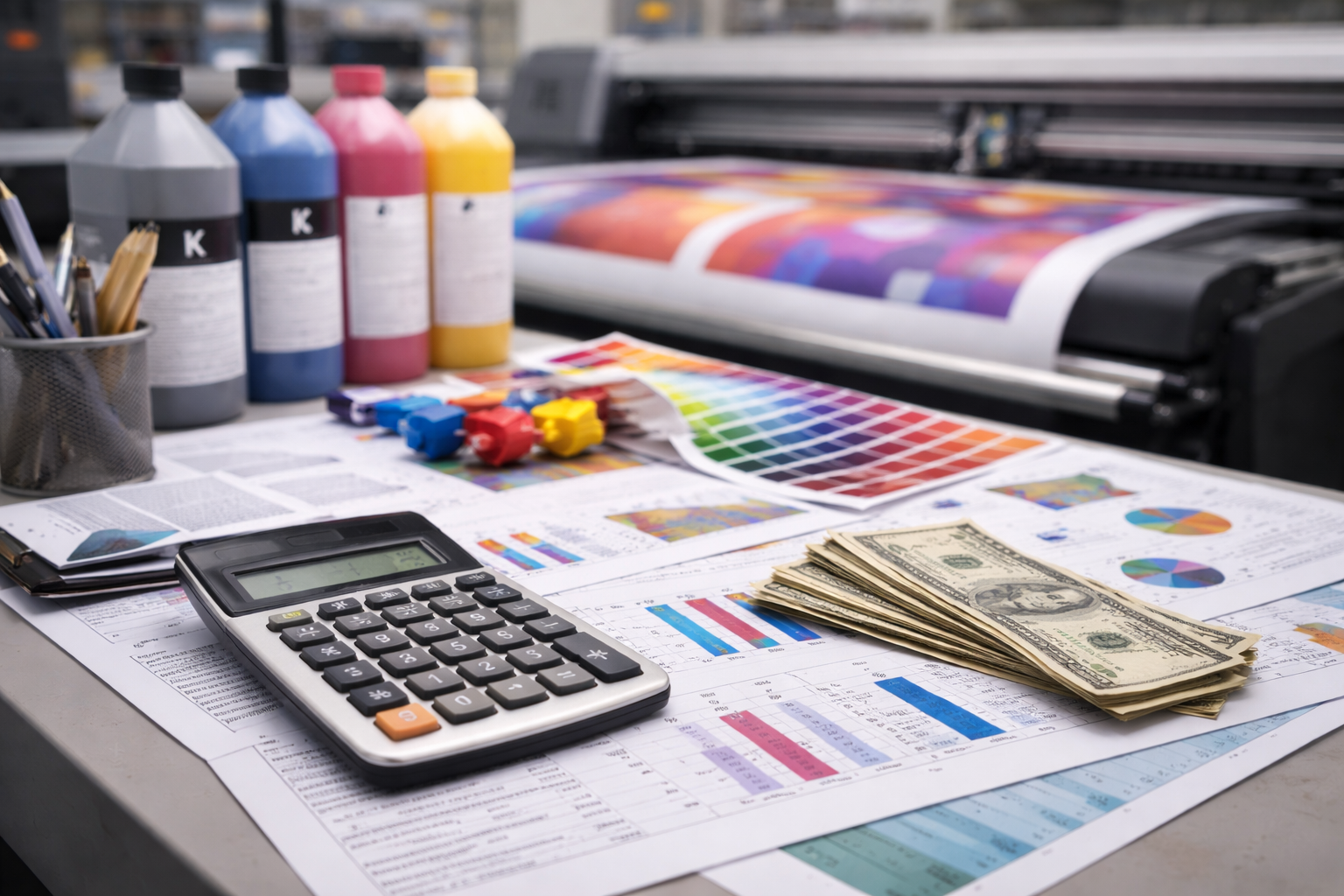
The flexibility comes at a price. On entry-level and mid-range equipment, your cost per square metre — ink, stock, and labour — is significantly higher than a high-volume operation. Your pricing has to reflect that to stay profitable, which can make you uncompetitive on volume work.
There's also a capacity ceiling. In-house equipment generally can't run multiple different jobs in tandem, so you hit your machine's maximum availability — and therefore your maximum revenue — earlier in the day than you might expect. Once you're there, your only options are to turn work away or run overtime shifts at higher labour rates.
That's the point where outsourcing volume work to a trade printer becomes the more economical choice. You can read more about the factors that drive these costs in our breakdown of large format printing costs.
What Is Trade Printing?
Trade printing is a service where you outsource production to a wholesale supplier who prints the work on your behalf. A genuine trade printer deals only with you — never your customer — so you keep the relationship and the brand while someone else handles the manufacturing.
The result is higher availability on your own equipment for priority, short-run, or custom jobs, and more time to focus on selling and growing your business — all without the capital outlay of buying and housing new equipment.
The Advantages of a Trade Printer
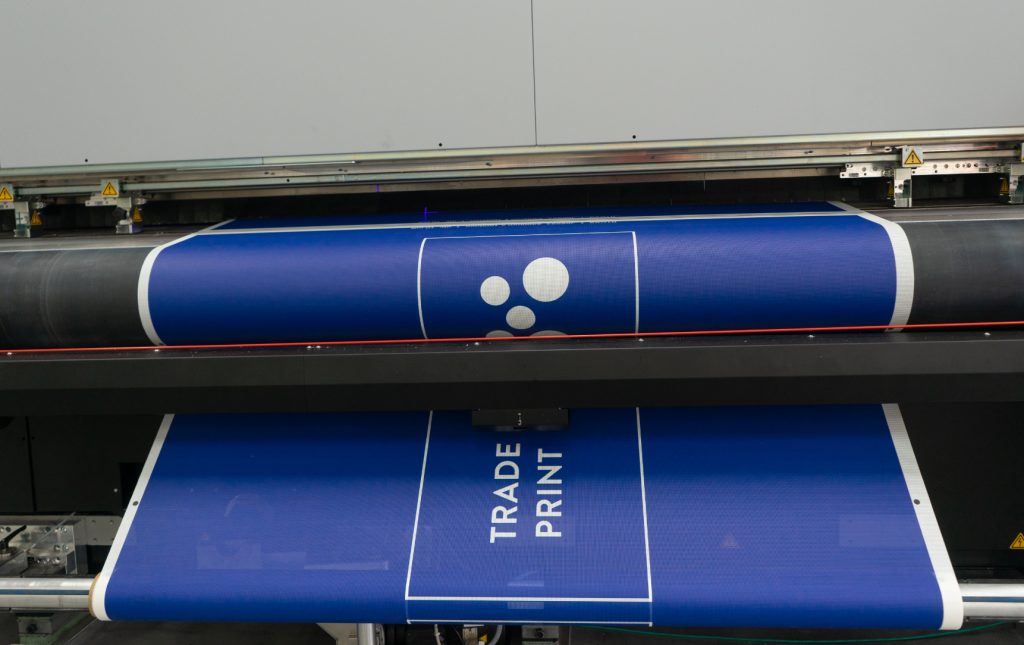
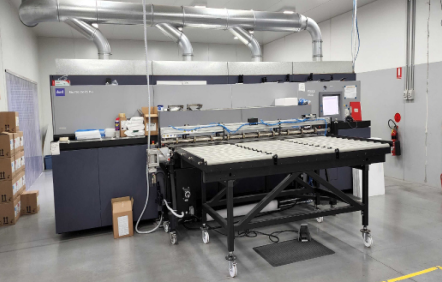
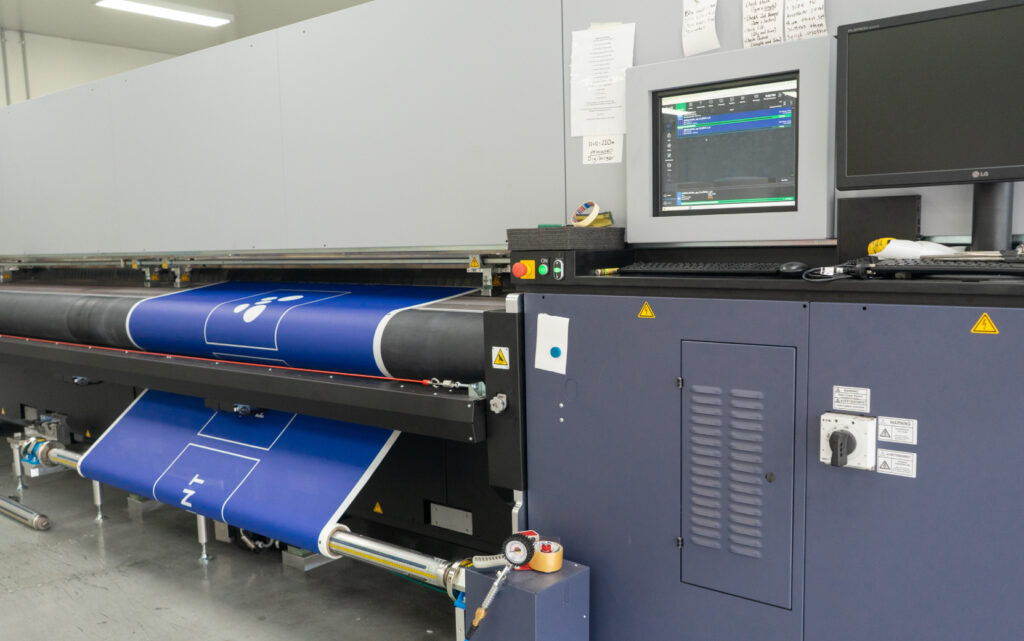
Inventory, experience, and equipment. Trade printing partners like Mediapoint have invested heavily in factory space, high-end equipment, trained staff, stock inventory, and the processes needed to deliver quality at high volume. Our high-volume Durst equipment lets us handle 150+ jobs daily, achieved by batching stock and running multiple production shifts. That's how we offer 24-hour turnaround on most jobs.
Lower costs for us mean higher margins for you. Our consumable cost per square metre is much lower than the entry-level and mid-range equipment most print shops run in-house. Because we produce at far higher volumes, we buy stock by the container, which lowers our material costs further. We pass those volume savings on, giving our reselling partners more margin to work with. It's a genuine win-win.
When a Trade Printer Isn't the Right Fit
Trade printing isn't right for every business, and it's worth being honest about that. Most trade printing models are built on set products with preset options — fixed stocks, print quality, finishing, and packing methods. If you regularly need something bespoke or off the cuff, a trade printer may not suit you. The trade printers with the best margins are generally not the most nimble, and for genuinely custom work, a general retail printer or signage company might be the better partner.
The model relies on batching and automation, so same-day and rush orders typically aren't possible — though 24-hour turnaround, even on solid volumes, usually is.
A trade printer's number one priority is delivering its resellers the most margin possible. To do that, it invests heavily in manufacturing, while the front-end, prepress, and dispatch are kept highly automated. If you need personal service and hand-holding on every order, a trade printer isn't the optimal choice — you'll be directed to an automated system that delivers speed, efficiency, and lower costs instead. Knowing what to expect upfront helps; our guide on evaluating a trade printer covers the questions worth asking before you commit.
What a Trade Printer Like Mediapoint Can Do for Your Business
For high-volume resellers, the right trade printing partner lets you:
- Add new products to your range without buying equipment
- Earn more margin from your existing customers with no capital outlay
- Downsize your own production while becoming more profitable
- Drop products you currently produce that aren't profitable
- Focus on your real strengths — design, selling, or marketing — instead of production
If you have a gap in products like mesh banners, corrugated plastic boards, stickers, or posters, a trade printer can fill it immediately. Before you send artwork, it's worth checking our guide on avoiding common artwork mistakes to keep jobs moving without rework.
Mediapoint has serviced high-volume print resellers and brokers exclusively for over 19 years. We have the experience, knowledge, and equipment to cater to almost any volume requirement.
Frequently Asked Questions
Is it cheaper to print in-house or use a trade printer?
For high-volume, repetitive work, a trade printer is almost always cheaper per unit, because fixed costs are spread across far more output. For low-volume, bespoke, or same-day work, in-house can be more economical and more flexible.
What is a trade printer?
A trade printer (also called a wholesale printer) produces printing on behalf of other print businesses. They deal only with the reseller, never the end customer, allowing resellers to offer products without owning the equipment.
Is printing a trade?
Printing is a skilled trade in the traditional sense — it requires specialised equipment, technical knowledge, and experience. In the print industry, "trade printing" refers specifically to wholesale printing produced for other print businesses to resell.
When should I keep printing in-house?
In-house production makes sense when your work is low-volume, highly varied, bespoke, or requires same-day turnaround — situations where flexibility matters more than cost per unit.
Can a trade printer handle my brand and customer relationships?
Yes. A genuine trade printer deals only with you, not your customers, so you retain the brand, the relationship, and the margin while they handle production.
Register for Trade Pricing
If outsourcing volume work to a trade printer is the right move for your business, the next step is to see trade pricing for yourself. Register for trade pricing to access live, transactional rates and start adding products to your range without the capital outlay.