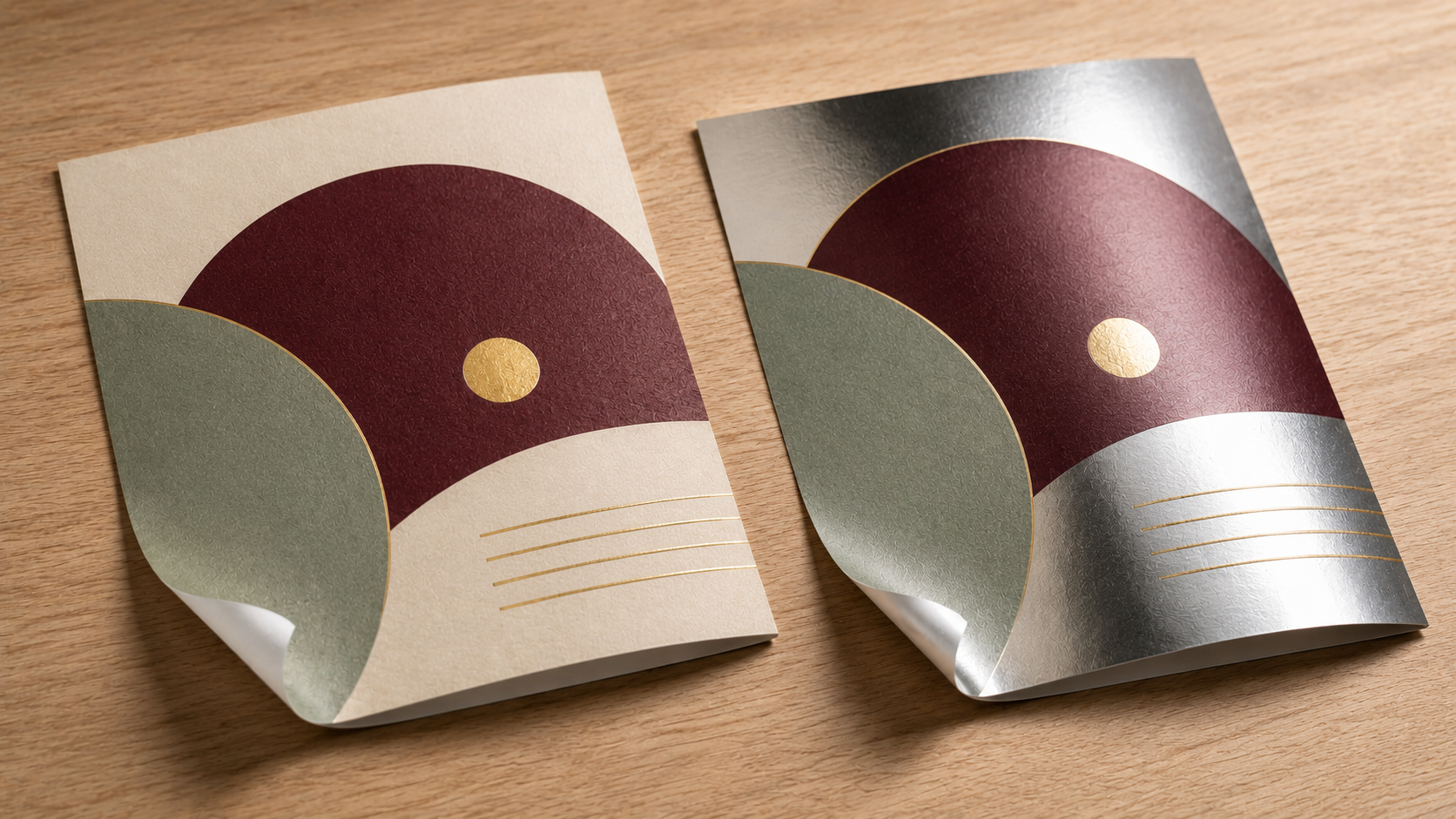
A Trade Printer's Guide to Roll Label Materials in Australia
Roll label material selection is the decision most likely to determine whether a label survives its application — or fails six weeks in with peeled corners, faded colour, or stained substrate. For sign shops, design studios, and trade resellers fulfilling roll label orders across wine, food, beverage, cosmetic, household, and industrial categories, the material conversation with clients is where the brief gets locked in correctly or where it goes sideways.
This guide walks through Mediapoint's four roll label substrates with the actual technical specifications, application matrix, and the honest constraints that affect what each material can and can't do. The audience is trade customers: the designers and resellers in the middle, advising client work and fulfilling orders. The aim is to give you the specific material knowledge to specify confidently and head off the conversations that get awkward at the prepress stage.
For broader best-practice content across labels and signage, see Mediapoint's Best Practice content — this article is the focused materials reference for roll label work.
Important: the technical specifications and application guidance in this article reflect Mediapoint's current substrate offerings and general industry experience. Substrate performance depends on application conditions, storage, environmental exposure, and other factors outside the printer's control. The customer is responsible for confirming the chosen substrate is fit for purpose in the specific application. For applications involving regulated industries (food contact, pharmaceutical, dangerous goods), confirm material suitability with the relevant regulatory authority before specifying.
The four substrates Mediapoint offers
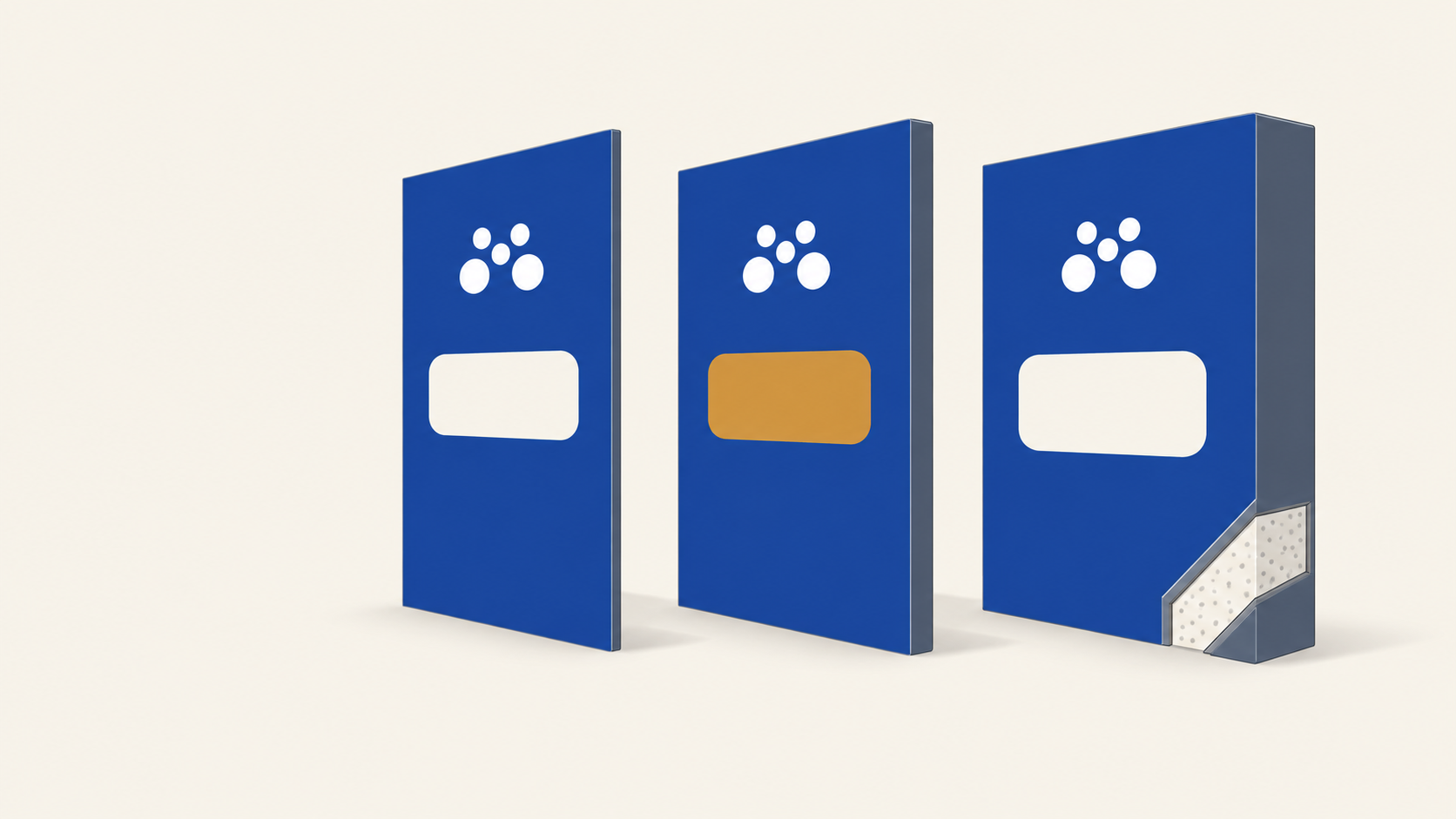
Mediapoint runs digital roll label printing on four substrates. Each has specific technical properties that make it the right answer for some applications and the wrong answer for others. Worth knowing all four before quoting client work — the right substrate for a wine label is rarely the right substrate for a freezer label, and a brand's product range often spans multiple substrate needs.
Pricing context: Mediapoint's substrate pricing is consistent across all four options. The cost of paper labels and silver BOPP labels at the same size and run length is the same. This is unusual in the trade label market, where silver and clear synthetic stocks typically carry significant premiums. The implication for trade customers: substrate choice is purely an application and brand-positioning decision, not a cost-optimisation decision. Choose the right material for the job; the price is the same.
Matt Paper
Technical specifications
- Face material: Stickler TT Matt S13 — high-quality woodfree machine-coated paper, matt white finish
- Grammage: 82 g/m²
- Caliper (thickness): 72 microns
- Backing: WG white glassine, 62 gsm, 53 microns
Adhesive
- S-Type permanent acrylic adhesive
- Peel adhesion: 12.7 N/25mm
- Initial tack: 7.8 N/25mm
- Cohesion: ≥3 hours under load
- Minimum application temperature: 5°C
- Service temperature: -20°C to +70°C
- FDA-compliant under 21 C.F.R. Section 175.105 for indirect food contact (outside of food packaging material)
- Recommended for substrates ≥25mm diameter
Application performance
Matt paper is the right choice when brand positioning calls for a warm, tactile, craft aesthetic. The matt finish reads as understated and traditional — well-suited to premium wine, artisanal food products, craft cosmetics, and any brand identity built around heritage or natural positioning. Print reproduction is strong: the matt surface holds colour cleanly and produces good photographic detail.
Where matt paper works:
- Indoor display labels (retail, hospitality, cellar door)
- Premium wine and spirits where the label aesthetic matters more than moisture survival
- Artisanal food products stored at room temperature
- Cosmetic and body care brands with craft positioning
- Indoor industrial labelling where the substrate doesn't face moisture or temperature extremes
Where matt paper doesn't work:
- Fridge or freezer storage (substrate absorbs moisture, edges curl)
- Ice bucket service (label degrades quickly under sustained moisture)
- Outdoor application beyond very short-term display
- Applications requiring lamination — Mediapoint does not laminate paper substrates, so paper labels can't be upgraded for moisture protection. The choice is paper aesthetic without lamination, or BOPP with optional lamination
Important trade-off: lamination is not available on paper labels at Mediapoint. Wineries or brands wanting the warm aesthetic of paper combined with the moisture resistance of laminated BOPP can't have both with our product range. Worth flagging this in client conversations early — paper labels work brilliantly in the right application and look wrong in the wrong one.
Gloss White BOPP
Technical specifications
- Face material: Stickler PP White TC AP901 — ultra-white polypropylene top-coated film, gloss finish
- Grammage: 54 g/m²
- Caliper: 60 microns
- Backing: WG white glassine, 65 gsm, 56 microns
- Backing transparency: >40% (allows applicator-line scanning)
Adhesive
- AP901 general purpose permanent acrylic adhesive
- Water-based acrylic composition
- Direct sunlight resistance: Excellent
- Cohesion: High
- Minimum application temperature: -5°C
- Service temperature: -40°C to +120°C
- Tack: 8 N/inch²
- Ultimate adhesion: 7 N/inch
- ISEGA-certified for direct food contact
Application performance
Gloss white BOPP is the workhorse synthetic substrate for the bulk of Australian roll label work. The combination of moisture resistance, vibrant colour reproduction, excellent direct sunlight resistance, and broad temperature tolerance covers most use cases that paper can't. The ultra-white face produces clean colour rendering — particularly important for brand colours that need to look consistent across multiple SKUs.
The temperature range is genuinely impressive: -40°C to +120°C service tolerance means the same label survives freezer storage during transport, ambient retail shelf conditions, refrigerated display, and direct sun exposure on a delivery dock in Darwin without degrading. For brands shipping product across Australian climate zones, this consistency matters.
Where white BOPP works:
- Wine labels (table wine, mid-market, anything chilled)
- Beverage labels (beer, cider, soft drinks, water)
- Food product labels where the package faces refrigeration or condensation
- Cosmetic and body care labels (the ISEGA food-contact certification covers direct-skin-contact applications too)
- Household chemical and industrial labels
- Any application requiring reliable moisture resistance
Where white BOPP needs careful specification:
- Brand identities specifically wanting a paper / craft aesthetic — BOPP is synthetic and reads as such, even with matte lamination applied
- Very small text or fine line work — the gloss finish can cause slight legibility issues under glare; consider matt lamination if fine detail matters
Optional lamination: white BOPP can be supplied with gloss lamination (G1028 BOPP clear over-lamination) or matt lamination (Y1028 matt polypropylene over-lamination) for additional surface protection and finish customisation. More on lamination below.
Gloss Clear BOPP
Technical specifications
- Face material: Stickler PP Clear TC AP901 — clear polypropylene top-coated film, gloss finish
- Grammage: 45 g/m²
- Caliper: 50 microns
- UV exposure rating: 6 months (depending on ink coverage)
- Backing: WG white glassine, 65 gsm, 56 microns
Adhesive
- AP901 general purpose permanent acrylic adhesive (same as white BOPP)
- Service temperature: -40°C to +120°C
- Approved for direct skin contact (suitable for body care and cosmetic packaging)
Application performance
Clear BOPP is the "no label look" substrate — for brand identities where the bottle, jar, or container colour is part of the design. Common in premium spirits, white wine in clear glass, sparkling wine, premium beverages, and cosmetic packaging where the product colour or container glass becomes a visual element of the brand.
The technical performance is essentially identical to white BOPP — same adhesive, same temperature range, same moisture resistance — but the substrate is transparent. This means designers must plan for the container background showing through during the artwork stage.
White ink workflow is essential:
For clear BOPP labels to render colour opaquely (so logos, text, and graphics read clearly against the container background), white ink prints as a base layer underneath the colour artwork. Mediapoint prints white ink first, with CMYK colour printed on top. The artwork file must specify white ink coverage areas explicitly using a spot colour layer named exactly "White". Files supplied without white ink instruction default to no white layer, which produces washed-out, see-through colour reproduction.
For trade customers receiving client artwork: clear BOPP artwork without a white ink layer is the most common preventable issue our prepress team sees on incoming files. If your client's designer hasn't specified white ink coverage, the file goes back for revision before production starts.
Where clear BOPP works:
- White and sparkling wine in clear or green glass (where the wine's colour shows through)
- Premium spirits in distinctive bottles (gin, vodka, premium tequila)
- Cosmetic packaging with coloured product showing through
- Premium positioning where the "floating" print aesthetic supports the brand
- Specialty beverages in clear PET bottles
Where clear BOPP needs careful specification:
- Designs requiring solid coloured backgrounds (the container colour interferes — the designer needs to plan around this)
- Very heavy ink coverage designs (defeats the purpose of clear substrate — at high ink coverage, white BOPP would be more cost-effective)
- Outdoor application beyond very short-term (6-month UV exposure rating means clear BOPP isn't right for sustained outdoor display, though see the outdoor durability section below)
Optional lamination: clear BOPP can be supplied with gloss or matt lamination for additional surface protection.
Silver BOPP
Technical specifications
- Face material: Stickler PP Silver TC AP901 — metallised silver top-coated polypropylene, brilliant gloss surface
- Grammage: 45 g/m²
- Caliper: 50 microns
- Backing: WG white glassine, 62 gsm, 55 microns
Adhesive
- AP901 general purpose permanent acrylic adhesive (same as white and clear BOPP)
- Same temperature performance: -40°C to +120°C service
- Same moisture resistance and durability profile
Application performance
Silver BOPP is the premium positioning substrate. The metallised silver face produces a reflective finish that pairs well with premium brand identities, limited editions, and specialty positioning. Common in premium wine and spirits, anniversary and limited-release products, beverage labels with metallic brand elements, and cosmetic packaging targeting luxury positioning.
The technical performance matches white and clear BOPP — same adhesive, same temperature range, same moisture resistance. The substrate cost is no different from the other BOPP options, which is unusual in the label market and worth flagging to clients used to substantial silver-substrate premiums elsewhere.
White ink workflow is essential for silver BOPP:
Like clear BOPP, silver BOPP needs white ink under colour artwork — for different reasons. Without white ink, printed colour renders against the metallic substrate, producing muted, grey-shifted, and reflective tones rather than vibrant brand colours. White ink as a base layer creates an opaque white surface beneath the CMYK ink, so colour renders cleanly and matches brand expectations.
For trade customers: silver BOPP without white ink specification is the second most common preventable issue on incoming artwork. Brands specifying silver for premium positioning often expect vibrant colour reproduction; without white ink the result is dramatically different from what the client expects. Flag this with the designer early.
Where silver BOPP works:
- Premium wine and spirits (limited editions, reserve releases, anniversary products)
- Sparkling and champagne (the metallic finish reinforces celebration positioning)
- Premium beverage brands using metallic brand elements
- Cosmetic and beauty packaging targeting luxury positioning
- Limited-edition product runs where the silver finish itself communicates exclusivity
- Industrial and product identification where metallic appearance is functional (tamper-evident labels, premium product seals)
Where silver BOPP needs careful specification:
- Designs depending on perfect colour fidelity — the metallic substrate slightly shifts colour rendering even with white ink underlayer. A sample order before a large production run is genuinely worth the cost for brand-colour-critical work
- Heavy ink coverage designs over the entire label area — defeats the silver effect; white BOPP would be more cost-effective
- Designs where the silver is intended as a foil-stamp aesthetic — silver BOPP is a full-substrate metallic surface, not a selective foil. For selective foil treatments, you'll need a specialist label printer with foil stamping capability
Optional lamination: silver BOPP can be supplied with gloss or matt lamination.
Lamination options
Mediapoint offers two lamination options for BOPP substrates: gloss and matt. Lamination is not available on paper labels.
G1028 Clear Gloss Lamination
- BOPP over-lamination tape with water-based acrylic adhesive
- Tape thickness: 0.028mm
- Film thickness: 0.022mm
- Used for surface protection on printed BOPP labels
- Adds gloss finish and additional moisture/scuff resistance
Y1028 Matt Polypropylene Lamination
- Matt polypropylene over-lamination tape with water-based acrylic adhesive
- Tape thickness: 0.028mm
- Film thickness: 0.019mm
- Used for surface protection on printed BOPP labels
- Adds matt finish — particularly suited to curved surfaces and premium positioning
- The matt finish often reads as more premium than gloss for high-end wine, spirits, and cosmetic positioning
When to specify lamination
Lamination adds cost to the label but provides genuine benefits for specific applications:
- Specify gloss lamination for: outdoor short-term displays, labels facing heavy handling, brands wanting an additional gloss finish beyond the substrate's native finish
- Specify matt lamination for: premium wine and spirit positioning (the matt finish reads more premium than gloss in this category), cosmetic and beauty packaging, labels applied to curved surfaces where the laminate's flexibility helps application
- Skip lamination for: straightforward indoor applications, labels not facing moisture extremes, cost-sensitive jobs where the lamination cost isn't justified
For trade customers fulfilling premium wine label work, matt lamination on white or silver BOPP is the standard premium specification. The matt finish on top of metallic or vivid printed colour creates the soft-touch premium aesthetic that brands expect at this tier.
Outdoor durability — important constraint
Worth being honest about a real limitation: Mediapoint's roll label substrates are designed for indoor or short-term outdoor use. Typical service life under sustained outdoor exposure is 3 to 6 months due to substrate and ink deterioration. After this window, expect visible fade, substrate degradation, and adhesive failure.
For typical roll label applications — wine bottles in cellars and fridges, food products on retail shelves, cosmetic packaging in storage and display, beverage labels in refrigerated trucks and stores — this isn't a constraint. These applications are indoor or sheltered, and the substrate easily outlasts the product's shelf life.
For applications requiring sustained outdoor durability — cellar door wayfinding signs, vineyard external signage, outdoor product display panels, permanent labelling on equipment kept outside — roll labels are the wrong product category. The right substrates for sustained outdoor work are:
- Corflute for short-to-medium term outdoor signage (12-24 month ink life)
- ACM (aluminium composite panel) for permanent outdoor installations (multi-year substrate, with the standard caveat that direct print on ACM has the same 2-year ink limit and laminated-print-on-ACM via a signwriter is the route for 3+ years outdoor service)
Worth setting this expectation with clients early. Wineries asking about labels for cellar door external display, food producers asking about outdoor product banners, or cosmetic brands wanting external retail signage all need rigid signage substrates, not roll labels. The "roll labels for product packaging, rigid signage for sustained external display" routing keeps everyone clear on what each product category does.
The application matrix
A working reference for matching substrate to application. Use this when scoping client briefs.
Wine labels
- Standard table wine, indoor display: matt paper (warm aesthetic) or white BOPP (durable)
- Chilled white wine, sparkling, anything seeing ice bucket service: white BOPP (matt paper substrate absorbs moisture)
- Premium positioning with metallic accents: silver BOPP (with matt lamination for premium feel)
- "No label look" on clear or green glass: clear BOPP with white ink underlayer for opaque colour elements
- Premium reserve and special editions wanting foil, embossing, or textured paper: route to specialist label printer — outside Mediapoint's scope
Food product labels
- Ambient-shelf products, traditional/craft positioning: matt paper
- Refrigerated products, anything moisture-prone: white BOPP (ISEGA food-contact certified)
- Premium specialty foods, limited editions: silver BOPP
- Heat-sealed pack labels or freezer-stored products: white BOPP (-40°C service temperature)
Beverage labels (non-wine)
- Beer, cider, soft drinks: white BOPP (handles refrigeration and condensation reliably)
- Premium spirits, gin/vodka/tequila in clear bottles: clear BOPP with white ink for branding elements
- Sparkling and champagne-style premium beverages: silver BOPP for limited editions
- Coffee and tea ambient-shelf products: matt paper or white BOPP depending on aesthetic
Cosmetic and body care labels
- Indoor-storage skincare and cosmetics: matt paper for craft positioning, white BOPP for moisture-resistant positioning
- Bathroom-environment products (shampoo, shower products): white BOPP (humidity tolerance)
- Premium beauty and luxury cosmetics: silver BOPP with matt lamination
- Clear-bottle products showing colour through (e.g., coloured oils, serums): clear BOPP with white ink
Household chemical and industrial labels
- Standard product labels: white BOPP (chemical-resistant adhesive, broad temperature tolerance)
- Premium brand positioning: silver BOPP
- Indoor-only applications: matt paper acceptable for cost-effective work
Outdoor or sustained-exposure applications
- 3-6 months acceptable: white BOPP with gloss lamination (UV protection)
- Beyond 6 months: not a roll label application — route to rigid signage substrates
Pricing across substrates
Mediapoint's pricing is flat across all four substrates at the same size and run length. The same wine label run on matt paper, white BOPP, clear BOPP, or silver BOPP costs the same per label. The order minimum is $120 + GST per job (dollar-based, not quantity-based).
This is genuinely useful framing for client conversations. Clients used to dealing with label printers where silver BOPP carries a 40-60% premium over white BOPP, or where clear stocks cost significantly more than opaque, often assume our pricing follows the same pattern. Confirming the flat pricing structure removes a friction point in the quote conversation and lets clients choose substrate purely on application fit rather than balancing aesthetic against cost.
The implication for substrate selection: choose what's right for the application and brand positioning. There's no substrate cost penalty for specifying silver over white, or clear over silver. The right substrate for the job is the right answer.
Common artwork problems related to material specification
The substrate-specific artwork issues Mediapoint's prepress team sees most often on incoming client files.
Clear BOPP supplied without white ink layer
Consequence: washed-out, see-through colour rendering — particularly visible on dark backgrounds where the container colour interferes. Watch for: clear BOPP artwork with no spot colour layer named "White". The fix is to request a revised file with white ink coverage specified explicitly under all areas requiring opaque colour rendering.
Silver BOPP supplied without white ink layer
Consequence: muted, grey-shifted colour with metallic interference. Watch for: silver BOPP artwork without a white ink layer underneath colour areas. The fix is to request a revised file with white ink coverage specified — typically under all areas where the brand expects vibrant or accurate colour rendering.
Paper label artwork built with heavy ink coverage in moisture-prone application
Consequence: substrate absorbs ink and ambient moisture in combination, producing label degradation faster than the substrate's nominal service life. Watch for: paper labels intended for chilled storage with full-bleed ink coverage. The fix is usually to advise the client to switch to white BOPP for the application.
White ink overprint settings not configured correctly
Consequence: white ink either knocks out CMYK colour (creating a white "hole" in the design) or doesn't print at all (defeating the underlayer purpose). Watch for: white ink layers without correct overprint settings. The artwork specs guide details the correct configuration — use Adobe Acrobat's Print Production output preview with Simulate Overprinting enabled to verify before submission.
Wrong substrate specified for outdoor application
Consequence: client expects multi-year outdoor durability and gets 3-6 month performance. Watch for: clients describing applications like "cellar door external signage" or "outdoor product display" without realising roll labels aren't the right product. The fix is to redirect the conversation to rigid signage substrates (corflute, ACM) for sustained outdoor work.
Frequently asked questions
Which substrate is best for wine labels generally?
Depends on the application within wine. White BOPP is the workhorse — it handles ice buckets, fridge condensation, and cellar humidity reliably. Matt paper is the right choice when craft aesthetics matter more than moisture survival (typically room-temperature-stored reds and premium positioning). Silver BOPP handles premium and limited editions. Clear BOPP works for "no label look" designs in clear glass.
Can I get a paper label with the moisture resistance of BOPP?
No. Mediapoint doesn't offer lamination on paper substrates. The trade-off between paper aesthetic (warm, tactile, craft feel) and BOPP moisture resistance can't be split — you're choosing one or the other. Matt lamination on white BOPP gets closest to a "soft premium" feel while keeping moisture resistance, but the substrate is still synthetic.
Why does silver BOPP cost the same as paper?
Mediapoint's pricing is flat across substrates. There's no substrate-cost differential at the printer level — choose what's right for the application, not what's cheapest. Clients used to other label printers' pricing structures often assume silver carries a premium; confirm the flat pricing in the quote conversation to remove the surprise.
Can I run different substrates in a single order?
Yes, but each design and substrate combination is a separate production job. Multiple jobs can be combined within one order for shipping and pricing efficiency, but you can't mix substrates on the same production run. A wine producer with white BOPP for table wines and silver BOPP for premium releases needs two separate jobs.
When is lamination worth specifying?
For premium positioning (especially matt lamination on white or silver BOPP for wine and spirits — the matt finish is the standard premium specification at this tier), for short-term outdoor exposure where extra UV protection helps, for labels facing heavy handling or curved-surface application. Skip lamination on cost-sensitive jobs or applications where the unlaminated substrate is fully adequate.
What's the maximum print width on roll labels?
Confirm with Mediapoint trade support for current production specifications — this varies by substrate and roll configuration.
Are the labels food-contact safe?
White BOPP is ISEGA-certified for direct food contact. Matt paper is FDA-compliant under 21 C.F.R. Section 175.105 for indirect food contact (i.e., outside of food packaging material). Clear BOPP and silver BOPP use the same AP901 adhesive (skin-contact approved). For regulated food contact applications, verify with the relevant regulatory authority that the specific substrate-adhesive combination meets your application's requirements.
Key takeaways
The substrate decision is downstream of the application and brand positioning, not the budget.
Mediapoint offers four roll label substrates: matt paper, gloss white BOPP, gloss clear BOPP, silver BOPP. Pricing is flat across all four — choose by application fit, not cost.
Paper is the right choice for indoor display where craft aesthetics matter and moisture isn't a concern. It's the wrong choice for refrigerated, ice-bucket, or moisture-exposed applications.
White BOPP is the workhorse for most synthetic-substrate work — wine, food, beverage, cosmetic. The -40°C to +120°C service temperature handles freezer storage through to direct sun.
Clear BOPP and silver BOPP both require white ink as a base layer for opaque colour rendering. Files without white ink specification render see-through (clear) or muted (silver).
Lamination (gloss or matt) is available on BOPP substrates only. Paper labels can't be laminated. Matt lamination on white or silver BOPP is the standard premium specification for wine and spirits.
Roll labels are an indoor / short-term outdoor product. Service life under sustained outdoor exposure is 3-6 months. For longer outdoor applications, use rigid signage substrates (corflute or ACM).
The order minimum is $120 + GST per job. Each unique design and substrate combination is a separate production job — multiple jobs can be combined within one order.
White ink is specified as a spot colour layer named exactly "White". It prints first as a base layer, with CMYK colour printed on top. Use Adobe Acrobat's Print Production output preview to verify white ink positioning before submission.
Working with Mediapoint on roll labels
Mediapoint prints digital roll labels for design studios, sign shops, and trade resellers servicing clients across wine, food, beverage, cosmetic, household, and industrial categories. Standard turnaround starts from the next business day for files received and approved before the daily cut-off. Order minimum is $120 + GST per job. Trade pricing is available for resellers and design studios with regular volume.
View our roll labels product page for current sizing options, material variants, and ordering. For application-specific guidance, see our wine label printing pillar guide for trade customers servicing the wine industry. Material decisions for food, beverage, cosmetic, and industrial label work follow the same substrate framework outlined in this article.
A final note on substrate suitability: the substrate guidance in this article reflects Mediapoint's experience as a trade label printer and the technical specifications supplied by our substrate manufacturers. Specific substrate performance in your client's application depends on environmental conditions, handling, regulatory requirements, and other factors outside the printer's control. For regulated industries (food contact, pharmaceutical, dangerous goods), confirm substrate suitability with the relevant regulatory authority before committing to large production runs. The customer is responsible for matching substrate choice to application requirements.